
Repeat fertilization every 4-6 weeks during the growing season to support continual growth and flowering. Avoid over-fertilizing, as this can lead to lush foliage at the expense of blooms.
6. Water Smartly So Bulbs Stay Moist, Not Soggy
Lilies require consistent moisture, especially during their active growth period. Water deeply once a week, providing about 1 inch of water each time. This encourages deep root development and strong stems.
Ensure that the soil remains moist but not waterlogged, as soggy conditions can lead to bulb rot. During periods of heavy rain, reduce watering to prevent excess moisture accumulation around the bulbs.
7. Stake and Support Tall Stems Before They Flop
As lilies grow taller, their stems may require support to prevent them from flopping over, especially when laden with heavy blooms. Insert stakes into the ground at planting time to avoid disturbing the bulbs later on.
Use garden twine or soft ties to gently secure the stems to the stakes, providing support without damaging the plant. This is particularly important for taller varieties and those grown in wind-exposed areas.
8. Protect New Growth From Pests, Disease, and Late Frost
Vigilance against pests and diseases is crucial for healthy lily growth. Regularly inspect your plants for signs of aphids, slugs, or lily beetles, and take action with organic or chemical controls as needed. Applying a layer of mulch around the plants can help deter pests and retain soil moisture.
In regions prone to late spring frosts, cover new growth with frost cloths or cloches on chilly nights to protect them from damage. This extra care ensures that your lilies thrive throughout the growing season and reach their full blooming potential.
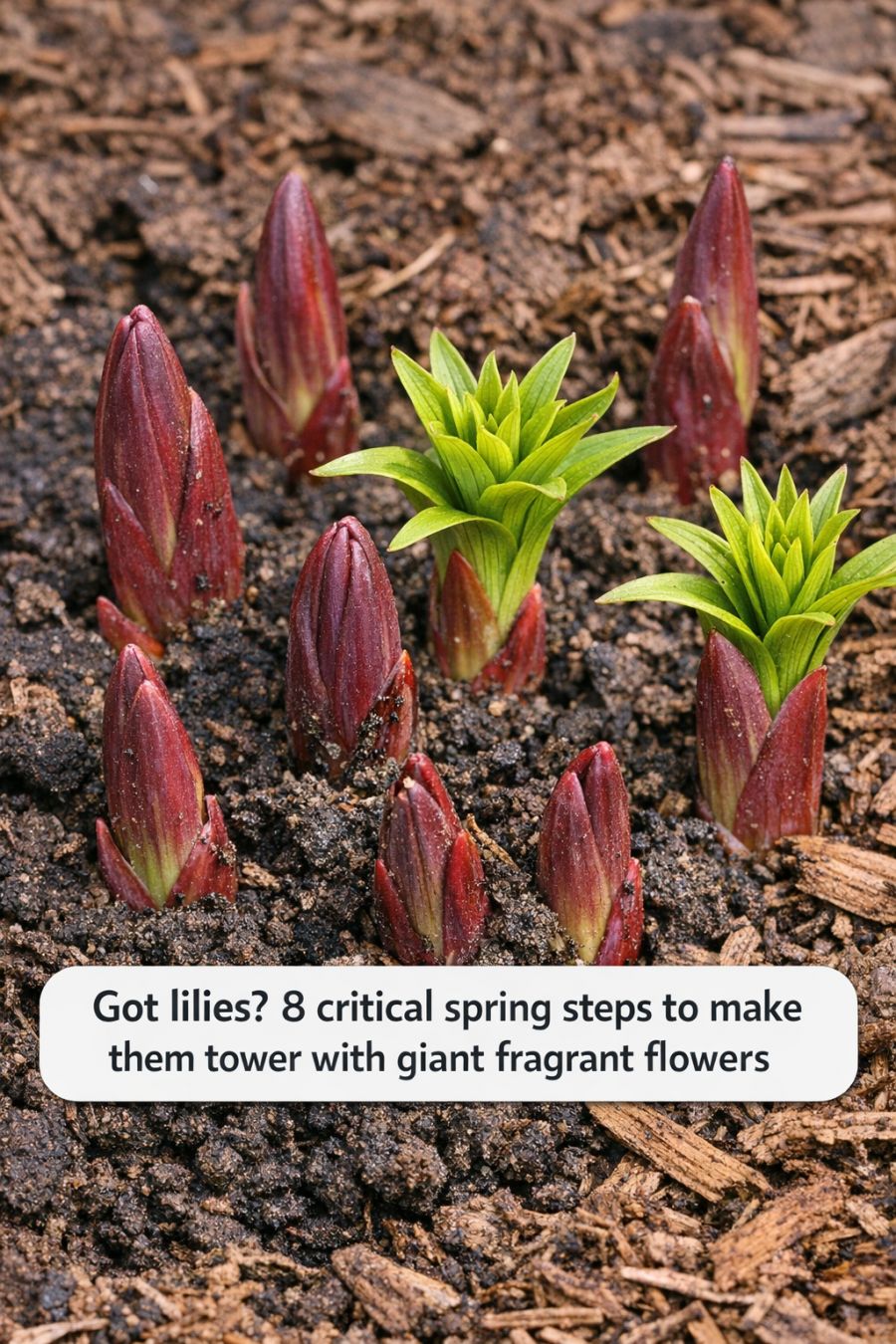
Got lilies? 8 critical spring steps to make them tower with giant fragrant flowers
Pages: 1 2
