
The finger test is an easy and effective way to monitor soil moisture and prevent water stress in your hydrangeas. Simply insert your finger about 2 inches into the soil near the base of the plant.
If the soil feels dry at this depth, it’s time to water. If it’s still moist, hold off on watering to avoid over-saturation. This method helps you tailor your watering schedule to the actual needs of your plants, preventing both under- and over-watering.
5. Adjust for Pot vs. Ground: Different May Routines for Each
Hydrangeas planted in pots require different watering routines than those in the ground. Potted plants tend to dry out more quickly and may need more frequent watering to maintain the right moisture levels.
In May, check potted hydrangeas daily and water when the top inch of soil feels dry. For ground-planted hydrangeas, stick to the deep watering once a week. By adjusting your routine based on their location, you ensure that all your hydrangeas receive the care they need.
6. Cool the Roots: Mulch and Shade Tweaks That Cut Water Stress in Half
Mulching is a powerful tool in retaining soil moisture and keeping hydrangea roots cool. Apply a 2 to 3-inch layer of organic mulch, such as bark or straw, around the base of your plants to help conserve moisture and regulate soil temperature.
Additionally, consider providing some shade during the hottest parts of the day, especially for hydrangeas planted in full sun. Temporary shade structures or strategically placed shade cloth can reduce water stress significantly, helping your plants thrive even in intense heat.
7. Stop the Drip on New Buds: Keep Water Off Flower Clusters
Water droplets on hydrangea buds can lead to diseases and damage, especially when exposed to sunlight. To protect your blooms, use watering methods that avoid wetting the flower clusters.
Soaker hoses and drip irrigation systems are ideal for directing water to the roots while keeping the flowers dry. If hand watering, aim the flow at the base of the plant and avoid splashing the blooms. This careful watering technique helps prevent bud drop and keeps your hydrangeas looking vibrant.
8. Cut Back on Fertilizer Watering to Avoid Leaf Burn
While fertilizing is essential for healthy growth, over-fertilizing can lead to leaf burn, especially when combined with watering. In May, reduce the frequency of fertilizer application and water thoroughly after feeding to dilute any excess salts.
Opt for a balanced, slow-release fertilizer tailored for hydrangeas, and apply according to the package instructions. By moderating both fertilizer and water, you minimize the risk of nutrient burn and ensure your hydrangeas receive the nourishment they need without damage.
9. Create a May Drought Plan for Vacations and Heat Spikes
Prepare for unexpected heat spikes and vacations by creating a drought plan for your hydrangeas. Set up an automated watering system with timers to ensure consistent moisture levels even when you’re away.
During periods of extreme heat, consider increasing the frequency of deep watering to twice a week. Having a backup plan, such as a neighbor or friend checking on your plants, can also help maintain their health during your absence. By planning ahead, you ensure your hydrangeas remain hydrated and stress-free throughout the summer.
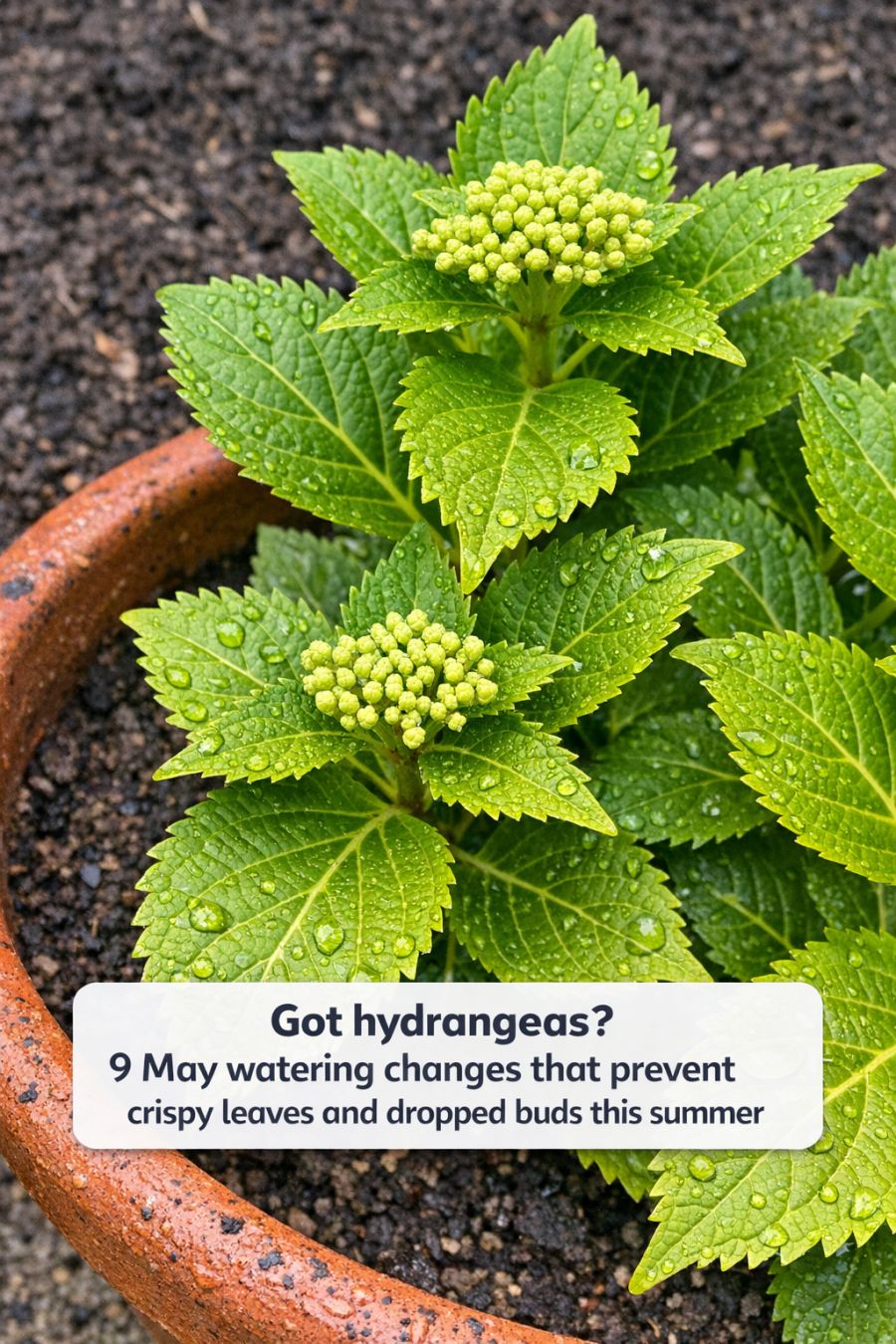
Got hydrangeas? 9 May watering changes that prevent crispy leaves and dropped buds this summer
Pages: 1 2
