
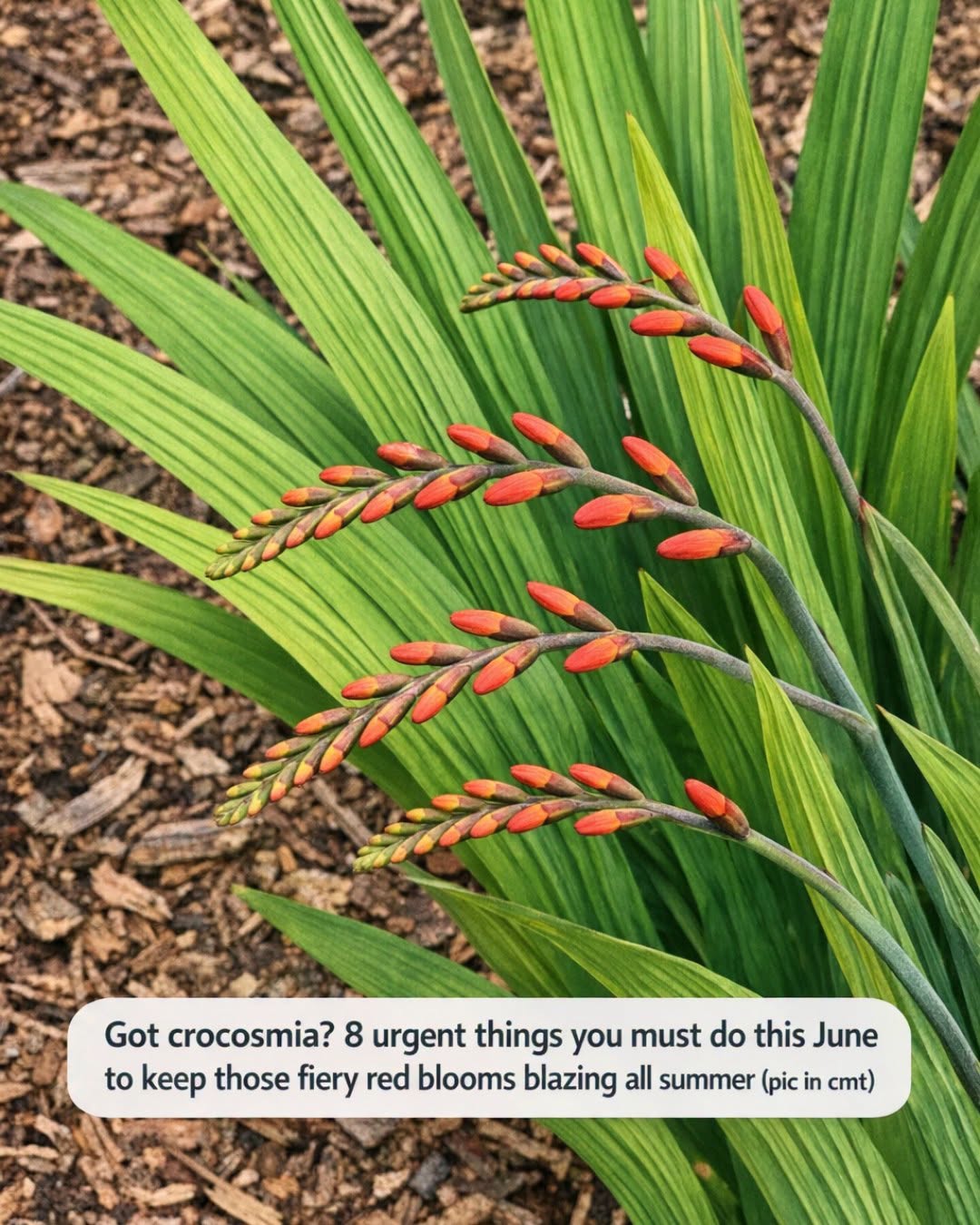
9. Start deadheading as soon as the first flowers fade
Once bloom begins, prompt deadheading helps keep the display tidy and may encourage the plant to direct more energy into continued flowering rather than seed production. Snip off spent flower stems or remove faded florets back to the next strong bud or branching point, using clean pruners.
I usually make deadheading part of my evening garden walk with a cup of tea in hand. It takes maybe 5 minutes for a small patch and pays off quickly. The plant looks sharper, the surrounding border feels more intentional, and you can catch any leaning stems or yellowing foliage while you are there.
10. Do not cut back healthy green foliage
This is an important June restraint job: leave the leaves alone unless they are clearly damaged, diseased, or fully dead. Crocosmia needs that strappy green foliage to fuel bloom and recharge the corms. I understand the temptation to tidy every browned tip, especially if you like a crisp border, but overtrimming weakens the plant.
If the leaves have minor scorch or ragged edges, trim only the worst cosmetic damage with scissors rather than shearing the whole clump. Save major cleanup for later in the season, after flowering and after the foliage has had time to feed the corms. In my own garden, the healthiest, best-returning crocosmia patches are the ones I resist fussing over too much in June.
11. Check drainage after storms
June can bring drenching rain, and crocosmia likes moisture but not swampy conditions. After a heavy storm of 1 inch or more, inspect the bed. If water sits for more than 12 to 24 hours around the clump, you have a drainage issue worth addressing quickly.
You can improve conditions short term by pulling mulch back slightly, opening shallow channels for runoff, or loosening compacted soil around but not through the root zone. Long term, crocosmia does best in soil amended with compost and, if necessary, planted slightly raised 1 to 2 inches above the surrounding grade. Persistent sogginess is one of the fastest ways to lose vigor.
12. Mark standout varieties and problem spots for later dividing and replanting
June is when crocosmia shows you what is working. Maybe one clump near a south-facing wall is already powering up with thick stems, while another by the fence is thin and floppy. Make notes now. I keep a simple garden notebook and jot down variety names, bloom timing, height, and whether a patch needs division in fall.
This sounds like a small task, but it saves a lot of guesswork later. If you wait until October, everything looks different and memory gets fuzzy. Marking the strongest performers now helps you expand the best clumps and rethink placements that are too dry, too shaded, or too crowded. Good June observation often improves next summer’s display as much as any fertilizer ever will.
13. Pair crocosmia with supportive neighbors, not bullies
If your crocosmia is struggling, the issue may not be the plant itself but what is growing around it. By June, aggressive companions such as large ornamental grasses, overgrown daylilies, or thirsty shrubs can crowd its root space and block airflow. Crocosmia performs better with neighbors that complement rather than overwhelm it.
I like pairing it with salvias, nepeta, echinacea, gaura, or shorter grasses that leave room for those arching stems to move. Aim for at least 8 to 12 inches between the crocosmia crown and the base of nearby perennials. In mixed borders, a little spacing preserves both health and drama, and drama is exactly why most of us planted crocosmia in the first place.
14. Harvest a few stems for indoors, but cut strategically
If you love bringing garden flowers into the house the way I do, June and early bloom season are a fine time to cut crocosmia stems. Do it selectively. Choose stems where the lowest flowers are open and the upper buds are still coloring. Cut in the cool morning with sharp pruners, and place stems in water immediately.
Do not remove more than about one-third of the flowering stems from a clump at one time. That keeps the garden display strong and avoids stressing the plant. Indoors, recut stems and change the vase water every 2 days. A good stem often lasts 5 to 7 days, and the curved shape brings such energy to a table that even one or two cuts feel worthwhile.
15. Plan for winter hardiness now if you garden in a colder pocket
Because I garden in the Midwest, I always pay attention to winter survival with crocosmia. Some varieties are reliably hardy in USDA Zones 6 to 9, while others struggle in colder or wetter winter sites. June is a good time to note which clumps are thriving so you can decide later whether to lift corms, mulch heavily, or improve drainage before cold weather returns.
If your garden sits in Zone 5 or in an exposed urban pocket with freeze-thaw swings, healthy June growth is your foundation for winter survival. Strong plants going into fall stand a better chance. I usually add a winter mulch layer of 4 to 6 inches after the ground cools, especially for newer plantings or less hardy cultivars. It is not a June task exactly, but June care sets the stage for whether there is anything worth protecting.
Crocosmia does not need constant pampering, but it does reward timely attention. A deep watering, a little mulch, a lighter hand with fertilizer, and a close eye on sun, spacing, and support can turn June into the launch point for weeks of blazing color.
If I had to sum it up in one sentence, it would be this: keep crocosmia evenly moist, uncrowded, upright, and in strong light, and it will do the showy part beautifully on its own. That is one of the reasons I love it so much—it looks exotic and dramatic, but with the right June care, it is surprisingly practical too.
