
8. How to Protect Your Tomatoes Without Harming Beneficial Insects
To protect your tomatoes while preserving beneficial insects, focus on integrated pest management strategies. Regularly inspect your plants for signs of hornworms and remove any that are not parasitized by hand. This manual method is effective and poses no threat to beneficial insects.
Additionally, consider planting companion plants such as basil or marigolds, which can deter hornworms. Using insecticidal soaps or neem oil sparingly can also help control pests without harming beneficial insects when applied correctly and selectively.
9. Natural Predators and Parasites That Keep Hornworms in Check
Aside from braconid wasps, hornworms have several natural predators that help keep their populations under control. Birds, such as robins and sparrows, are known to feed on hornworms. Beneficial insects like ladybugs and lacewings also prey on hornworm eggs and smaller larvae.
Encouraging these natural predators by providing a diverse garden habitat with plenty of food sources and hiding places can enhance your garden’s resilience against hornworm infestations. Planting a variety of flowers and maintaining a pesticide-free environment will attract and sustain these helpful species.
10. How to Prevent Future Hornworm Infestations in Your Garden
Preventing future hornworm infestations starts with vigilance. Regularly inspect your tomato plants for signs of hornworms and remove them promptly. Rotating crops and maintaining healthy soil can also reduce the likelihood of infestations by disrupting the life cycle of pests.
Implementing companion planting strategies, such as growing dill, borage, or marigolds near your tomatoes, can naturally repel hornworms. Keeping your garden tidy by removing debris and weeds will further discourage hornworm habitation.
11. When to Worry: Look-Alikes, Allergies, and Handling Safety Tips
While tomato hornworms are generally harmless to humans, some people may experience mild skin irritation when handling them. It’s recommended to wear gloves if you need to remove them by hand. Hornworms are often confused with the tobacco hornworm (Manduca sexta), which is similar in appearance but has different markings.
If you notice unusual symptoms after contact with hornworms or any garden pest, such as persistent itching or allergic reactions, it’s advisable to consult a medical professional. Understanding how to safely handle garden pests ensures that you can manage your garden effectively without compromising your health.
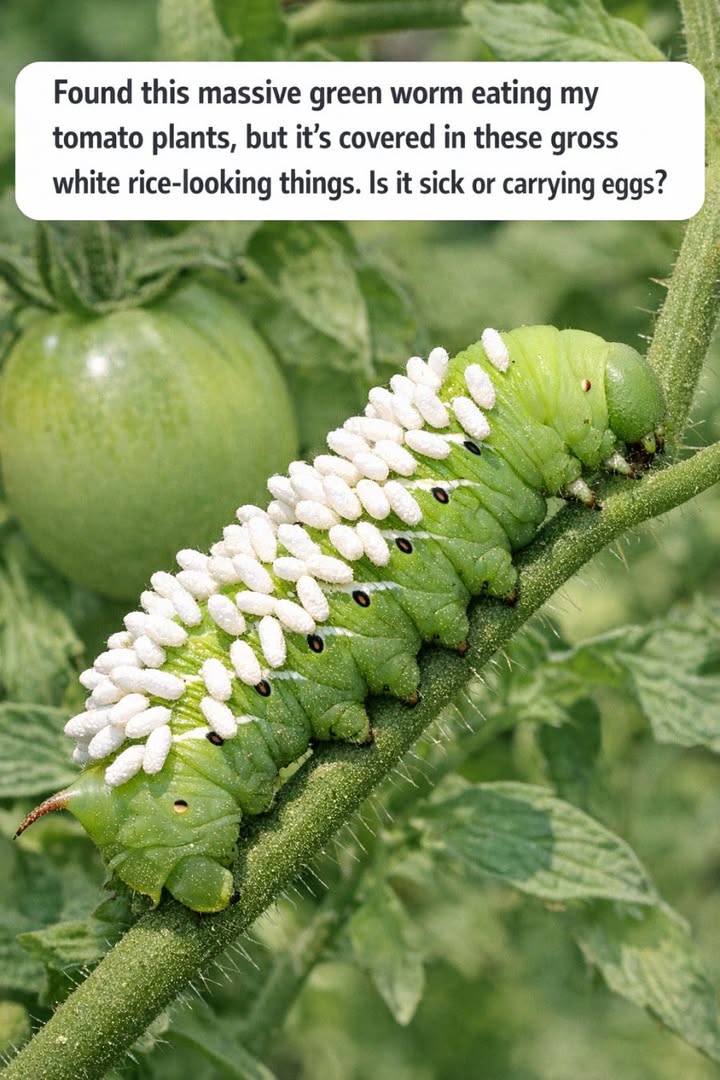
Found this massive green worm eating my tomato plants, but it’s covered in these gross white rice-looking things. Is it sick or carrying eggs?
Pages: 1 2
