
Why Burning Seemed Like the Perfect Fix:
✅ Volume Reduction: Burning trash reduced its volume by up to 90%. A massive pile of garbage shrank down to a tiny, manageable pile of ashes.
✅ Sanitation: Fire killed the bacteria, flies, and rodents that were attracted to rotting garbage piles.
✅ Convenience: Instead of hauling heavy trash cans blocks away to a collection point, you could just walk down the hall or into the basement and burn it on-site.
✅ Cost-Effective: It appeared clean and efficient, saving municipalities and building owners the cost of constant trash hauling.
Because of these benefits, incinerators were installed everywhere: in the basements of grand apartment buildings, in the janitor closets of public schools, in the utility rooms of hospitals, and even in private, wealthy homes.
For those who didn’t have an indoor incinerator, the solution was the burn barrel or a backyard incinerator.
💡 Historical context: In many older apartment buildings (especially in cities like New York or Chicago), the incinerator was built into the fireplace flue in the living room. Residents would simply toss their daily trash into the fire, watching it disappear in a flash. It felt like magic.
🌫️ The Reality: Smoke, Stench, and Ash
While burning trash appeared clean and efficient on paper, the reality was quite different.
This was normal life for decades. Smoke, stench, and ash were just a part of the daily lives of many.
The Hidden Costs of the “Quick Fix”:
The Illusion
The Reality
“It disappears!”
The trash didn’t disappear; it turned into toxic air pollution and fine particulate matter.
“It’s sanitary!”
Burning plastics, rubber, and treated papers released dangerous chemicals, dioxins, and heavy metals into the air we breathe.
“It’s convenient!”
The ash had to be manually shovelled out. In apartments, “ash men” had to carry heavy buckets of hot, dusty ash down stairwells to the street.
“It’s clean!”
The smoke stained buildings black, ruined laundry hanging on outdoor lines, and left a perpetual acrid stench in the hallways.
People simply accepted the smoke and the stench because they didn’t yet understand the long-term environmental and health impacts of burning mixed garbage.
🌿 The Decline: When the Fires Went Out
So, when did we stop burning our trash in these heavy iron boxes?
The shift began in the mid-20th century and accelerated in the 1960s and 1970s with the birth of the modern environmental movement.
The Death of the Incinerator:
✅ The Clean Air Act (1963/1970): Governments began to strictly regulate air pollution. The thick, black smoke from trash incinerators was identified as a major public health hazard.
✅ The Rise of the Sanitary Landfill: Engineering advanced, allowing for the creation of massive, lined landfills that could safely bury waste without contaminating groundwater.
✅ Centralized Waste Management: Cities invested in massive garbage trucks and centralized waste processing, making on-site burning obsolete.
✅ Modern Incineration (Waste-to-Energy): Today, trash is still burned in some places, but in massive, highly filtered, multi-million-dollar facilities that capture emissions and generate electricity. The small, smoky incinerator in the school basement was banned.
Today, those heavy iron doors are welded shut, bricked over, or left abandoned in the corners of old buildings.
Discover more
Health
vinegar
🗝️ Other Forgotten Architectural Relics
The trash incinerator isn’t the only piece of “menacing” or confusing hardware we’ve left behind in our older buildings. If you look closely at historic homes and schools, you’ll find other relics of the past.
Forgotten Fixtures of the Past:
Relic
What It Was
Why We Don’t Use It Anymore
Coal Chutes
Small iron doors at the foundation of a house where coal was dumped into the basement.
We switched from coal heating to oil, gas, and electricity.
Milk Doors / Chutes
A small wooden or metal door built into the exterior wall of a kitchen. The milkman would place bottles inside.
The advent of home refrigerators and supermarket shopping.
Phone Niches
A small, built-in wooden cubby in the hallway, just the right size to hold a wall-mounted telephone.
Phones became wireless and mobile; we no longer need a dedicated “phone spot.”
Dumbwaiters
A miniature freight elevator used to carry food from the kitchen to the dining room, or laundry to the basement.
Modern homes are single-story, or we just carry things up the stairs ourselves.
Laundry Chutes
A vertical shaft dropping clothes directly from the upstairs bedrooms to the basement laundry room.
Modern laundry rooms are often on the main floor; chutes also pose a safety risk for small children.
🕰️ A note on history: Every time a new technology emerges, an old architectural feature becomes obsolete. The heavy iron incinerator door is just a monument to the era before the garbage truck.
❓ Frequently Asked Questions
Q: Were old incinerators dangerous?
A: Yes, they could be. If the flue wasn’t cleaned regularly, creosote and ash could build up and cause a chimney fire. In schools and apartments, improper use (like burning explosive chemicals or overloading the grate) occasionally led to accidents.
Q: Why were they sometimes located near restrooms or in basements?
A: Incinerators required a massive, dedicated chimney flue to vent the smoke safely above the roof. In older buildings, the main plumbing stacks and ventilation shafts were often grouped together in the center of the building or in utility rooms (like janitor closets adjacent to restrooms) to save space and simplify the architecture.
Q: Can you still use an old incinerator today?
A: Absolutely not. Using an unfiltered, indoor trash incinerator is illegal in almost all municipalities due to severe air quality and fire codes. If you find an old one, it should be professionally decommissioned, sealed, or removed.
Q: What happened to the ashes?
A: In homes, the ashes were shoveled into metal buckets and often used to cover icy walkways in the winter, or mixed into garden compost (if only wood/paper was burned). In large apartment buildings, specialized janitorial staff had to haul the heavy ash bins out to the street for disposal.
Q: Did people burn everything in them?
A: They were supposed to only burn paper, cardboard, and food scraps. However, people often threw in rubber, plastics, and tin cans, which is what caused the toxic, black smoke and damaged the grates.
💙 A Compassionate Closing Thought
If you’re reading this because you’ve ever stood in front of an old, heavy iron incinerator door and felt a shiver of curiosity—or because you simply love uncovering the hidden history of the places we live—please know:
🚪 History is built into the walls. We walk past these heavy, clumsy relics every day without noticing them. But they are quiet storytellers, waiting for us to ask what life was like when they were new.
🚪 Our ancestors were practical. They didn’t have the environmental science we have today. They looked at a mountain of garbage and found the most logical, efficient solution they could. We shouldn’t judge them for the smoke; we should honor them for trying to keep their communities clean.
🚪 Progress is a series of goodbyes. Every time we invent a better way to do things, we leave something behind. The incinerator is gone, but it paved the way for the modern waste management and environmental protections we rely on today.
🚪 There is beauty in the obsolete. There is a deep, historical charm in the heavy iron latches, the soot-stained brick, and the cast-iron grates. They remind us of a time when things were built to last, and when the mechanics of daily life were visible, loud, and real.
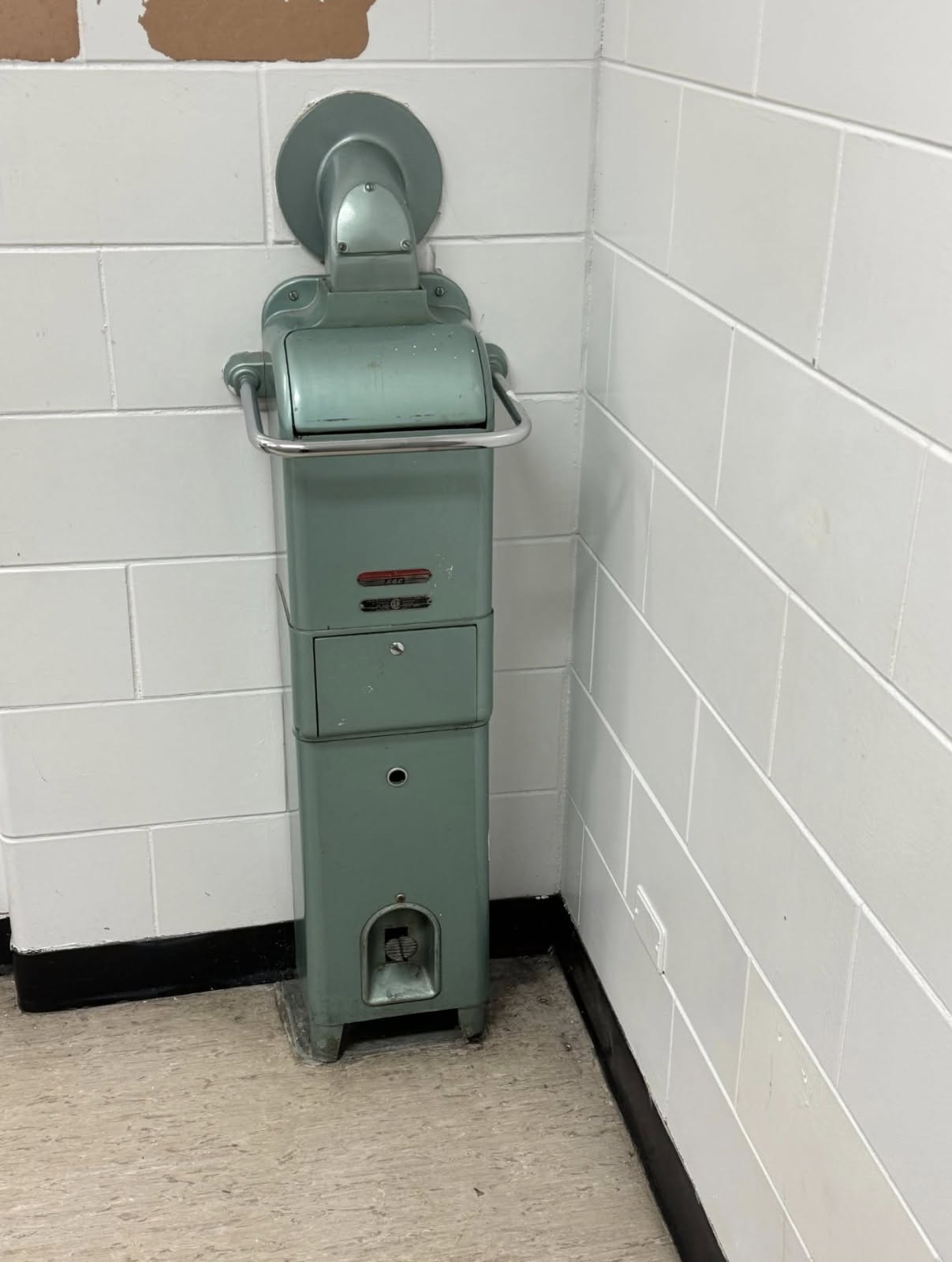
That menacing metal box in the school restroom isn’t a monster.
It’s a time capsule.
A reminder of the smoke and ash of the past.
And a testament to how far we’ve come.
So the next time you see an old coal chute, a bricked-up milk door, or a heavy iron incinerator frame…
Pause.
Run your hand over the cold metal.
And thank it for the work it did, back when the world was a little different.
Have you ever found a forgotten relic in an old building? What was it, and did you know what it was used for? Share your historical discoveries and architectural mysteries respectfully in the comments below.
