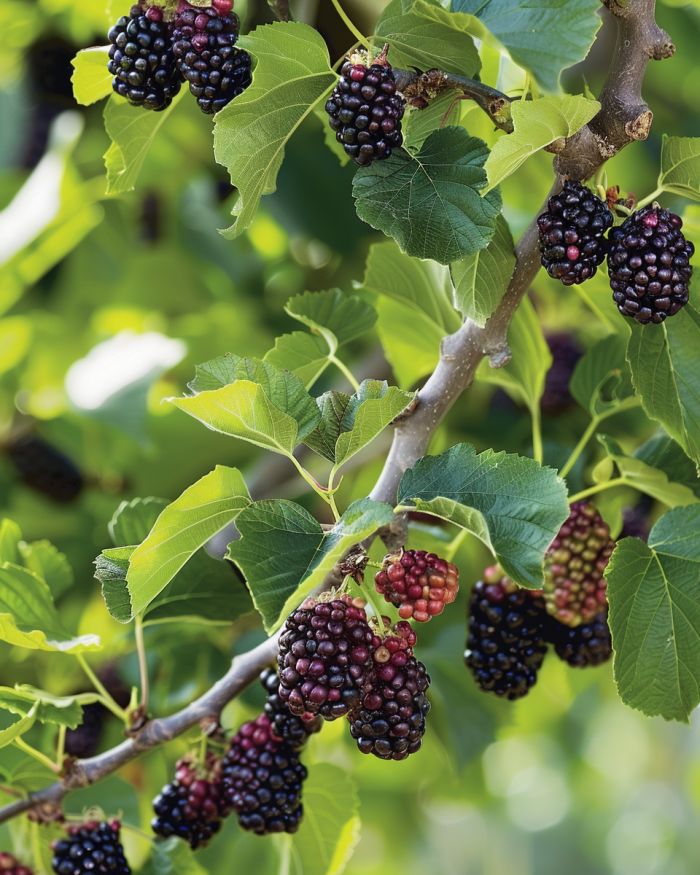
The health benefits of the mulberry tree extend far beyond its fruit. Here are some of the medicinal uses of various parts of the mulberry tree:
Mulberry leaves are rich in antioxidants and have been used traditionally to regulate blood sugar levels, making them beneficial for people with diabetes. The leaves can be brewed into a tea that helps lower blood glucose levels and improves overall metabolic function.
The bark of the mulberry tree possesses anti-inflammatory properties. It has been used in traditional medicine to treat conditions like eczema and dermatitis. Used in poultices, mulberry bark can help reduce skin inflammation and irritation.
Mulberries are nutrient-dense, containing vitamins C and K, fiber, and iron. Eating mulberries can help support a healthy immune system, reduce the risk of certain cancers, and improve digestion. The fruit also possesses anti-aging properties due to its high antioxidant content.
By incorporating a mulberry tree into your garden, you are adding not only a source of delicious and nutritious fruit but also a versatile, medicinal powerhouse. Mulberries are more than just a delightful snack; they offer a natural remedy for various ailments and contribute to overall well-being.