
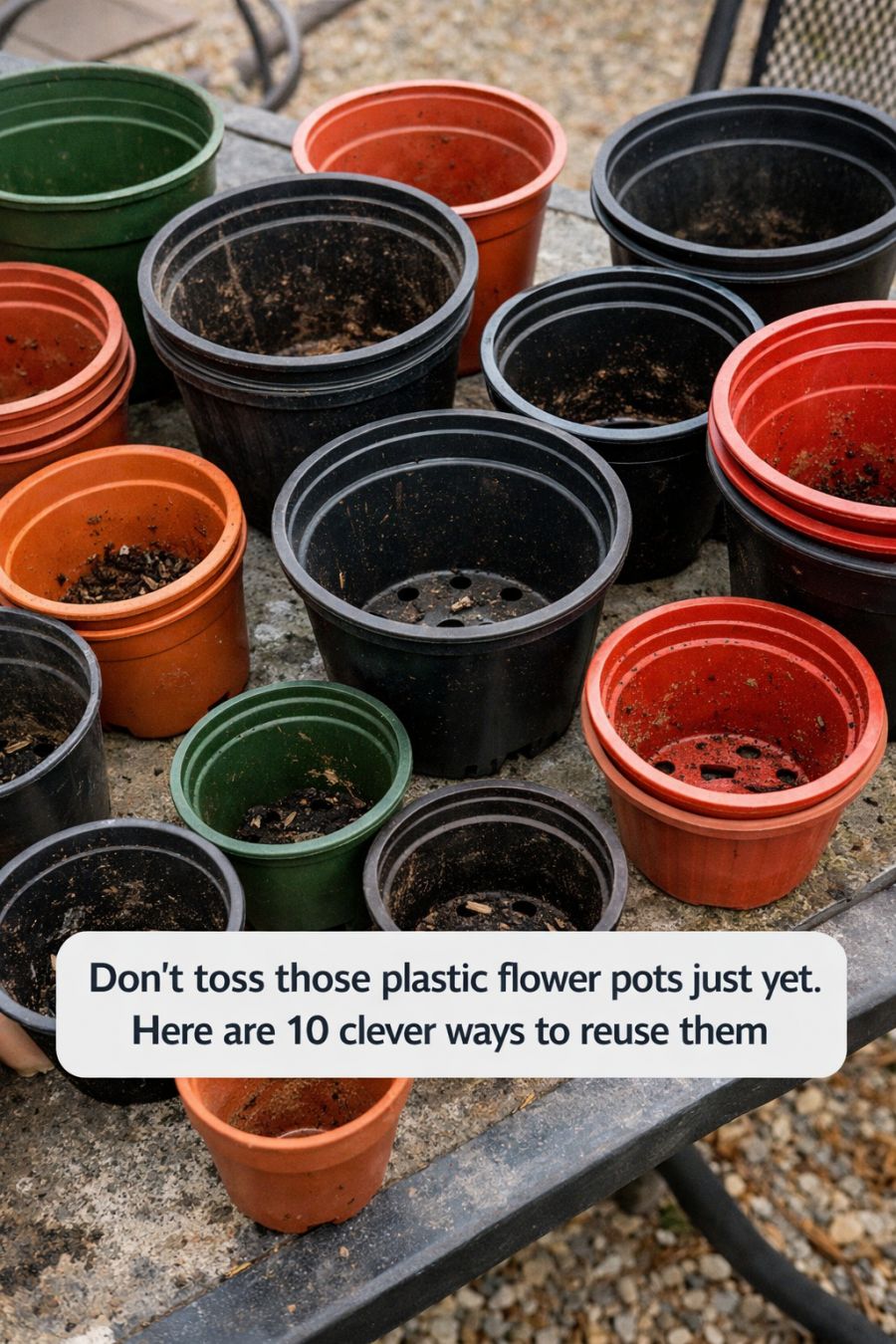
In a world increasingly conscious of sustainability and environmental impact, finding creative ways to repurpose everyday items can make a significant difference. Plastic flower pots, often discarded after a single use, are one such item that can have a second life in various forms. Instead of tossing them into the recycling bin, consider the myriad of ways these versatile containers can be reused around your home and garden.
Reusing plastic flower pots not only helps reduce waste but also inspires creativity and resourcefulness. Whether you’re an avid gardener looking to start seeds or someone seeking to organize household clutter, these pots can serve multiple purposes. This article explores ten innovative ideas to breathe new life into your old flower pots, ranging from practical garden solutions to fun DIY projects.
Advertisement
1. Turn Small Pots Into Seed-Starting Stations
Small plastic flower pots are perfect for seed starting, especially if you have limited space. Begin by cleaning the pots thoroughly to remove any residual soil or plant matter, which could harbor pests or diseases. Fill each pot with seed-starting mix, which is lighter than regular potting soil and encourages delicate seedlings to thrive.
Plant seeds according to the package instructions, usually at a depth of about twice the seed’s diameter. Keep the soil consistently moist, and place the pots in a sunny location or under grow lights. As the seedlings grow, transplant them into larger containers or directly into your garden. This method allows you to extend your growing season and have a head start with healthy plants.
2. Build a Budget-Friendly Herb or Salad Garden
Transform a collection of plastic flower pots into a convenient and cost-effective herb or salad garden. Choose pots that are at least 6 inches in diameter to provide ample space for root growth. Fill them with a quality potting mix, combining it with compost for added nutrients.
Plant a variety of herbs like basil, parsley, and cilantro, or leafy greens such as lettuce and arugula. Arrange the pots on a sunny windowsill or balcony where they can receive at least six hours of sunlight a day. This setup not only saves money on grocery bills but also ensures you have fresh, organic herbs and greens at your fingertips.
3. Create Decorative Planters With Paint, Rope, or Fabric
Unleash your artistic side by transforming plain plastic pots into decorative planters. Begin by cleaning the pots and applying a coat of primer to ensure paint adhesion. Use acrylic or spray paint in colors that match your decor, and consider adding patterns or stenciled designs for extra flair.
If painting isn’t your style, wrap the pots in jute rope or fabric. Secure the material with hot glue, starting from the bottom and working your way up. This approach not only disguises the plastic but also adds texture and interest to your space. These customized planters make beautiful additions to any indoor or outdoor setting.
4. Use Pots as Organizers in the Garage, Shed, or Closet
Plastic flower pots are excellent for organizing small items in your garage, shed, or closet. Use them to sort and store tools, nails, screws, or gardening supplies. Label each pot with its contents using waterproof markers or labels to ensure everything remains organized and easy to find.
In closets, utilize pots to keep accessories like scarves, belts, and small items contained. Their stackable nature allows for efficient use of vertical space, helping you maximize storage in even the smallest areas.
5. Transform Pots Into Outdoor Lanterns or Candle Holders
Create ambient lighting in your garden or patio by turning plastic flower pots into lanterns or candle holders. Start by cutting out decorative patterns or shapes on the sides of the pots using a utility knife. Ensure the designs are large enough to allow light to shine through.
Place an LED candle or solar light inside each pot for a safe and eco-friendly glow. These lanterns can be hung with twine or displayed on tables, adding a charming and whimsical touch to your outdoor areas.
6. Make DIY Birdbaths, Feeders, or Bee Watering Stations
Pages: 1 2
