
8. Be Patient
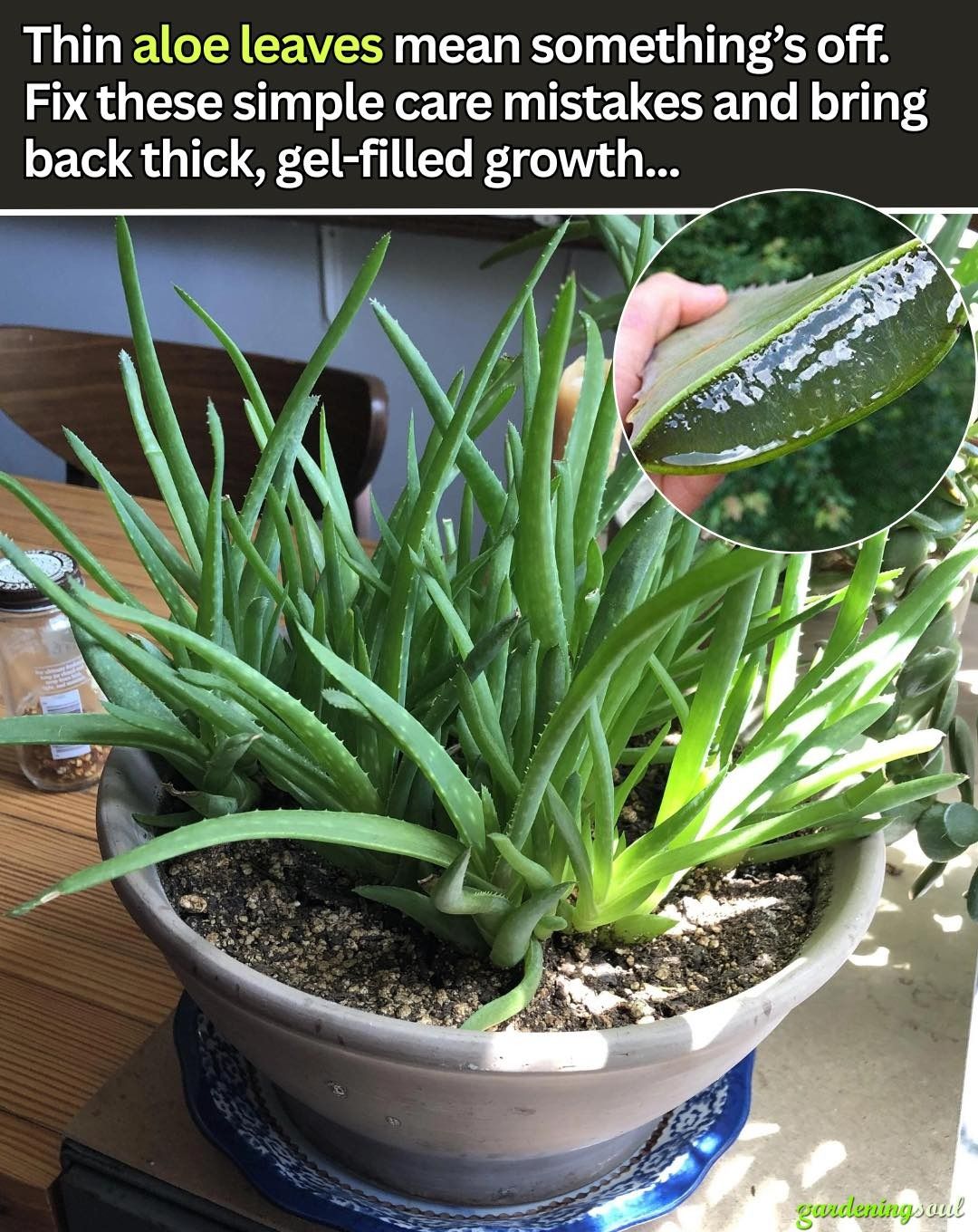
If your aloe leaves are thin due to poor care in the past, remember that recovery takes time. Aloe vera grows slowly, especially indoors.
New leaves should appear thicker as conditions improve.
Don’t remove older thin leaves unless they’re damaged or dying.
Troubleshooting Common Aloe Vera Problems
Even with good care, you may still encounter issues. Let’s tackle some of the most frequent questions about thin aloe leaves:
Why Are My Aloe Vera Leaves Wrinkled?
Wrinkled leaves often signal underwatering. Aloe stores water in its leaves, and if it uses up those reserves, the leaves start to shrivel. Increase watering slightly but avoid overwatering.Flora & Fauna
Why Are My Aloe Leaves Soft and Mushy?
Soft, mushy leaves are almost always caused by overwatering and root rot. Remove the plant from its pot, check roots, and trim off any mushy parts. Repot in fresh, dry succulent soil.
Can Aloe Vera Recover From Thin Leaves?
Yes! If you correct the underlying problems, your aloe will gradually produce thicker leaves. Older thin leaves may not recover fully, but new growth should be firm and plump.
How to Encourage Fast Growth
While aloe vera is naturally slow-growing, you can help it grow faster (and thicker) by:
Providing bright, direct sunlight
Watering properly and allowing the soil to dry out
Feeding sparingly with balanced succulent fertilizer
Keeping temperatures warm and stable
A happy aloe will produce new, thick leaves several times per year.Flora & Fauna
Benefits of Thick Aloe Vera Leaves
Getting your aloe to produce thick leaves isn’t just about looks – it’s also about the plant’s health and usefulness.
Discover more
Horticulture
Flora & Fauna
Alternative & Natural Medicine
Thick aloe leaves mean:
Higher water reserves, keeping the plant healthier during dry spells
More gel inside each leaf for use in skin care and first aid
A more robust, attractive plant for your home décor
Thin, limp aloe leaves often signal stress, while thick leaves indicate a thriving, healthy plant.Flora & Fauna
How to Harvest Aloe Vera Gel Without Damaging the Plant
Once your aloe leaves are thick and juicy, you might want to harvest some gel.
Discover more
Gardening
bush
Shrubs & Bushes
Here’s how:
Choose an outer leaf near the base of the plant.
Use a clean knife or scissors to cut it off close to the stem.
Rinse the leaf under water.
Cut off the spiny edges along both sides.
Slice the leaf open lengthwise.
Use a spoon to scoop out the clear gel inside.
Always harvest sparingly so your plant can continue growing strong.Flora & Fauna
Thin aloe vera leaves are a sign that your plant isn’t getting the care it needs – but with the right light, water, soil, and environment, you can transform your aloe into a thriving, succulent wonder.
