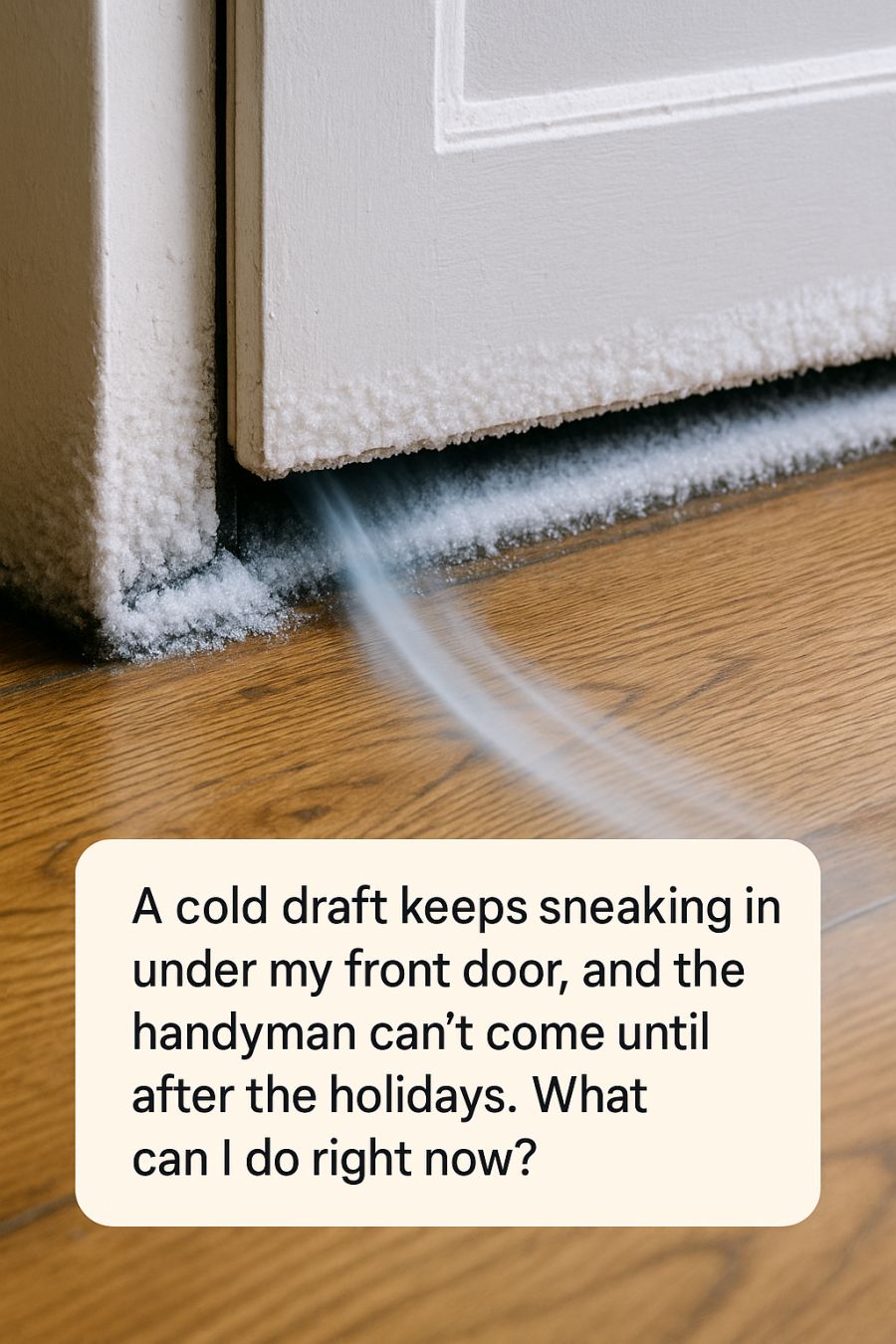
1. Do a Quick Detective Check to Confirm the Draft Source
Before taking action, it’s essential to confirm the source of the draft. Start by feeling around the door’s edges and bottom with your hand to detect any cold air slipping in. Pay close attention to the bottom seam, and use a flashlight or candle to detect movement in the flame, which indicates airflow. Taking measurements of the gap under the door can also help you determine which solutions will be most effective, typically gaps larger than 1/4 inch will let in noticeable drafts.
2. Roll Up a Towel or Blanket for an Instant Draft Stopper
One of the quickest fixes is to roll up a towel or blanket and place it snugly against the bottom of the door. This method is especially useful for doors with gaps of 1/2 inch or larger. Make sure the towel or blanket completely covers the width of the door to effectively block out the cold air. You can even secure it with a few rubber bands or twist ties at the ends to keep it in place.
3. Make a No-Sew DIY Draft Snake From Old Clothes
Transform old clothes into a draft snake, a long, cylindrical fabric tube filled with insulating material. Cut the fabric from a pair of jeans or a sweater to the length of your door, typically around 36 inches for standard doors. Fill the fabric tube with rice, sand, or even crumpled newspaper to weigh it down, and tie off the ends. Place this DIY draft snake snugly at the base of your door for a reusable and eco-friendly draft blocker.
4. Use Pool Noodles or Pipe Insulation as a Door Seal Hack
Pool noodles or pipe insulation can be excellent makeshift draft stoppers. Cut a pool noodle or piece of pipe insulation to fit the width of your door, usually about 36 inches. Then, slice it lengthwise and slide it under the door, ensuring it’s snug against the floor to block the draft. This method is particularly useful because it allows the door to open and close easily while still blocking the cold air.
5. Tape Down Temporary Weatherstripping to Seal the Gap
Temporary weatherstripping is a quick and effective way to seal gaps. Use foam tape or self-adhesive weatherstripping and apply it along the bottom and sides of the door frame where drafts are entering. For best results, clean the door surface first to ensure the adhesive sticks properly. This temporary fix can significantly reduce drafts until you can install a more permanent solution.
6. Block the Breeze With Rugs, Mats, and Heavy Curtains
Strategically placing rugs or mats in front of the door can help insulate the area and reduce drafts. For additional protection, consider hanging a heavy curtain or blanket over the door. This added layer of fabric acts as a thermal barrier, trapping warm air inside and preventing cold drafts from penetrating your living space.
7. Layer Painter’s Tape or Duct Tape Along the Door Edge
Painter’s tape or duct tape can be used to temporarily seal door gaps and block drafts. Apply a strip of tape along the door’s edges where gaps are present. While not the most aesthetically pleasing solution, it is effective for immediate relief. Ensure the tape is applied smoothly to prevent it from peeling off easily.
8. Add Cardboard, Foam, or Bubble Wrap as an Emergency Barrier
For a quick emergency fix, use cardboard, foam sheets, or bubble wrap to block drafts. Cut the material to fit the gap under your door and secure it with tape. These materials can act as an insulator and are particularly useful if you need something thicker to cover larger gaps.
9. Rearrange Furniture to Create a Buffer Zone by the Door
Rearranging furniture to create a buffer zone near the door can help mitigate drafts. Place a bookshelf, console table, or even a chair close to the door to block and absorb some of the cold air. This tactic isn’t a complete fix but can reduce the draft’s impact and add a layer of warmth to your entryway.