
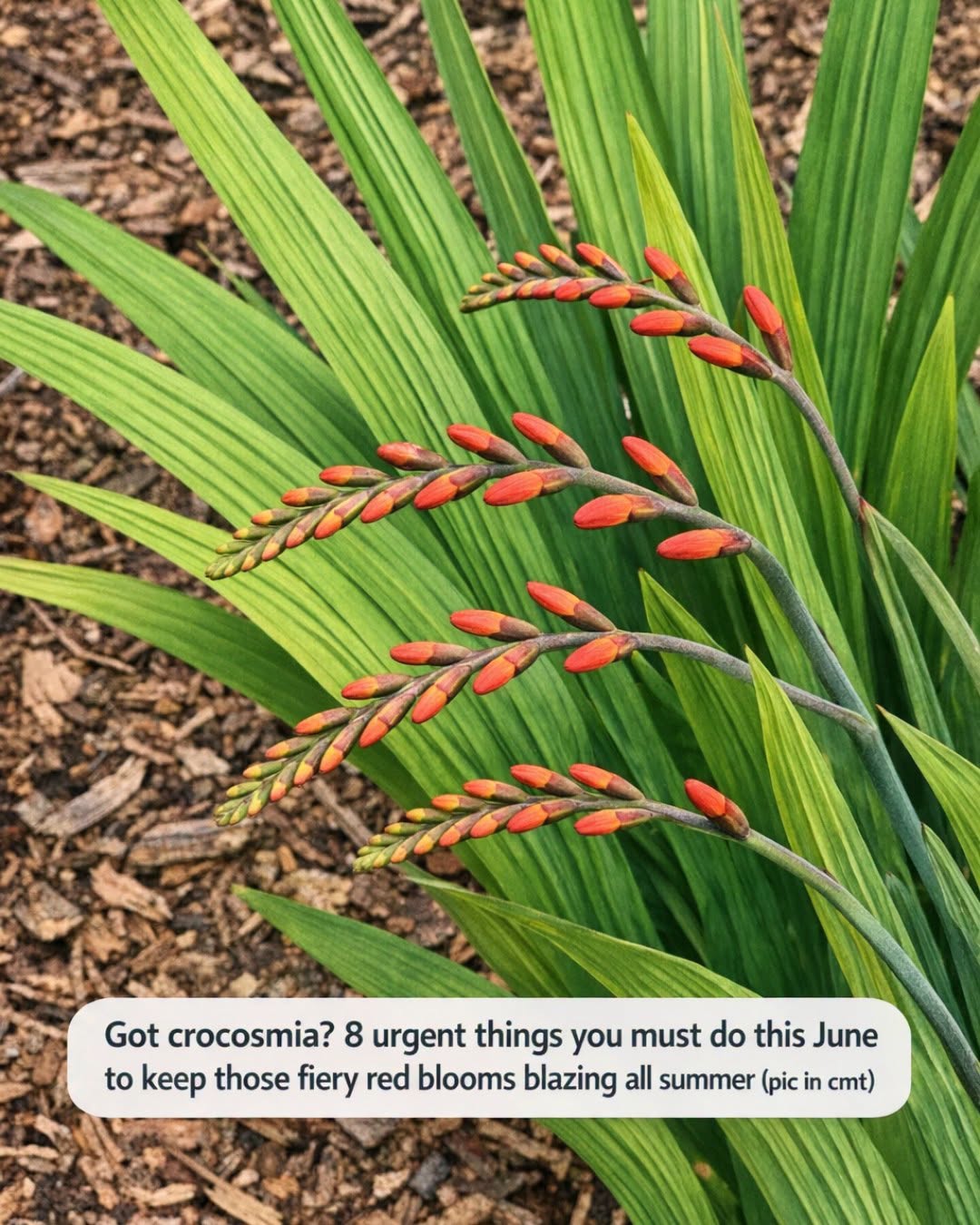
Crocosmia is one of those plants that can make a June garden look like it has suddenly decided to throw a party. Those arching stems, sword-like leaves, and hot red, orange, or scarlet flowers have a way of catching late-day light that I never get tired of, even after decades of gardening in a Midwestern city where summers can swing from soaking wet to stubbornly dry in a week. But June is also the month when crocosmia either gears up for a long, dramatic bloom season or starts showing the little warning signs that lead to floppy stems, fewer flowers, or a patch that sulks instead of shines.
If you want those fiery blooms to keep blazing through summer, this is the month to act. Below, I’m walking through the most important June jobs for crocosmia, from watering and feeding to staking, thinning, and spotting trouble early. Even though the headline says 8, I’m going a bit further, because in my experience a few extra June checks make the difference between a decent display and the kind of border planting that stops people on the sidewalk.
1. Check soil moisture deeply, not just at the surface
Crocosmia likes evenly moist soil while it is actively growing and setting buds, especially in June when stems are lengthening fast. The mistake I see most often is giving the bed a quick sprinkle for 5 minutes and assuming the plant is watered. In reality, that often wets only the top 1 inch of soil. You want moisture to reach 6 to 8 inches down, where the corm roots are actually drawing water.
My rule is simple: push a trowel into the soil or use your finger to test down 3 to 4 inches. If it is dry at that depth, water thoroughly. In most June conditions, that means about 1 inch of water per week, either from rain or irrigation. In a hot spell above 85°F with wind, container-grown crocosmia may need water every 1 to 2 days, while plants in the ground may need a deep soak every 4 to 5 days in sandy soil. Water at the base in the morning so foliage dries quickly.
2. Mulch now before the heat really settles in
One of the smartest June jobs is laying down a 2- to 3-inch layer of organic mulch around the clump. I usually use shredded bark, leaf mold, or composted wood chips. Keep the mulch about 1 to 2 inches away from the crown so the base of the plant does not stay soggy.
Mulch does three useful things at once: it slows evaporation, keeps roots cooler during sudden summer heat, and reduces weed competition. In a city garden where reflected heat bounces off brick, concrete, and fences, that extra insulation can be the difference between sturdy, lush leaves and a patch that starts browning at the tips by July. It also cuts down on the watering workload, which I always appreciate.
3. Feed lightly if growth looks pale or sluggish
Crocosmia is not a greedy plant, but June is a good month for a modest feeding if the foliage looks light green, narrow, or underpowered. I prefer a balanced granular fertilizer such as 5-5-5 or 10-10-10 applied at half the label rate, or a low-nitrogen bloom-supporting feed such as 5-10-10 if the plants already have plenty of foliage.
Use restraint here. Too much nitrogen can give you an impressive leaf display and fewer flowers, plus softer stems that flop more easily. For established clumps in decent soil, 1 to 2 tablespoons of granular fertilizer per square foot is generally enough, followed by watering. If you top-dressed with compost in spring, you may not need additional feeding at all. I often tell newer gardeners that crocosmia responds better to consistency than excess.
4. Remove weeds before they steal moisture and nutrients
June weeds are fast, and crocosmia does not enjoy being crowded at ground level. Pull or hoe weeds while they are still small, especially aggressive moisture thieves like crabgrass, chickweed, and creeping charlie. If you let them mature through June, they compete just when crocosmia is trying to build buds and flowering stems.
I like to weed after rain or after a deep watering, when roots slip out more cleanly. Work gently near the clump so you do not disturb shallow feeder roots. Ten minutes of cleanup once a week is usually enough to keep the patch open, airy, and focused on bloom production rather than survival.
5. Thin overcrowded clumps if flowering has declined
Crocosmia can form dense colonies from corms, and while that makes for a lush look, overcrowding eventually reduces airflow and bloom count. If you have a clump that flowered beautifully 2 or 3 years ago and now produces lots of leaves but fewer stems, crowding may be the culprit.
June is not the ideal month for full-scale division in every climate, but it is an excellent time to identify problem clumps and, if necessary, remove a few outer shoots to relieve congestion. Make a note for fall or early spring division if the clump is truly packed. In a mature planting, I like to maintain about 6 to 8 inches of breathing room around the strongest growth. That little bit of space often improves both flower size and stem quality.
6. Stake taller varieties before they flop
Some crocosmia varieties, especially vigorous types like ‘Lucifer,’ can reach 3 to 4 feet tall in rich soil. Add a thunderstorm, a windy corner, or too much nitrogen, and those dramatic stems can lean hard in a hurry. It is much easier to support them in June while the foliage is still rising than to wrestle a flattened patch back into shape in July.
I use discreet green stakes or a half-ring support placed behind the clump, then loosely tie stems with soft twine or plant tape. The goal is not to bundle the plant into a stiff column. You want the arching habit to stay natural while keeping flower stems upright enough to show well and resist breakage. If your crocosmia sits near a path, support matters even more because heavy bloom stems can spill into walking space.
7. Make sure the plants are getting enough sun
Crocosmia blooms best in full sun, which usually means at least 6 hours of direct light a day. In hotter Midwestern gardens, a little late-afternoon relief is tolerated, but too much shade leads to lanky foliage and fewer flower spikes. June is when surrounding perennials and shrubs have filled in, so a bed that looked sunny in April may now be noticeably dimmer.
Take a few minutes to observe the area from 9 a.m. to 4 p.m. If the plants are getting only 3 to 4 hours of direct sun, you may need to prune back overhanging growth nearby or plan a move when the plant is dormant. I have seen crocosmia go from barely blooming to absolutely electric the year after being shifted from dappled shade into a brighter border.
8. Watch for thrips, spider mites, and iris borer-type damage
Crocosmia is not the fussiest summer bloomer, but June is still the right time to inspect it closely. Look for silvery streaking, distorted leaves, speckling, webbing, or buds that fail to open cleanly. Thrips and spider mites are more likely in hot, dry conditions, especially if plants are stressed.
Check the undersides of leaves and inside the fan of foliage once a week. If you spot a light infestation, a firm spray of water and removal of badly damaged leaves may help. In tougher cases, insecticidal soap can be useful, but apply it early or late in the day and follow label directions exactly. Also keep an eye out for mushy bases or yellowing tied to poor drainage, since crocosmia corms can rot in waterlogged soil.
