
If you’re a gardener, few things can be more alarming than discovering your once-healthy tomato plants being ravaged by a mysterious green caterpillar. The sight of a massive green worm devouring your plants is distressing enough, but when you notice it’s covered in peculiar white structures that resemble grains of rice, you might start to wonder what exactly you’re dealing with. Is the worm sick? Is it carrying eggs that will hatch into even more plant-destroying pests? These questions can leave even the most seasoned gardener puzzled and concerned.
Understanding what’s happening in your garden is the first step to managing it effectively. This article will explore what this green caterpillar is, what those strange white protrusions are, and how they play a crucial role in the ecosystem of your garden. We’ll delve into the life cycle of the tomato hornworm, its interactions with natural predators such as the braconid wasp, and what actions, if any, you should take to protect your precious tomato plants. By the end of this article, you’ll be equipped with the knowledge to make informed decisions about how to handle these unexpected garden visitors.
1. What Is This Giant Green Worm on Your Tomato Plants?
The large green worm you’ve stumbled upon is likely the tomato hornworm, a common pest in gardens across North America. These caterpillars are the larvae of the five-spotted hawk moth (Manduca quinquemaculata) and are known for their voracious appetite for tomato plants. Tomato hornworms can grow up to 4 inches in length, making them one of the larger caterpillars you might encounter in your garden. They have a distinctive horn-like protrusion on their rear end, which is harmless to humans but serves as a slight deterrent to predators.
Hornworms are typically green with white stripes running diagonally across their bodies, which help them blend in with the foliage. This camouflage can make them difficult to spot until they have already caused significant damage to your plants. Their feeding habits can quickly defoliate a plant, leaving little more than bare stems and a few ragged leaves in their wake.
2. Those White Rice-Looking Things: Eggs or Something Else?
The white structures you observe on the hornworm are not eggs, but rather the pupae of braconid wasps. These tiny parasitic wasps lay their eggs on or inside the caterpillar. As the wasp larvae mature, they exit the hornworm’s body and spin small, white, cocoon-like structures on its back. These structures, which resemble grains of rice, are the cocoons from which new adult wasps will eventually emerge.
This parasitic relationship is beneficial to gardeners, as the wasp larvae consume the hornworm from the inside out, effectively controlling the caterpillar population naturally. It’s a fascinating example of how intricate and interconnected ecosystems can be, with various species playing specific roles that contribute to the overall balance.
3. Meet the Tomato Hornworm: Friend, Foe, or Both?
While the tomato hornworm is often seen as a foe due to its destructive feeding habits, it’s important to recognize its place in the ecosystem. As a larva, it provides a food source for a variety of predators, including birds and beneficial insects like the braconid wasp. Once it pupates and emerges as a hawk moth, it contributes to pollination, albeit not as effectively as bees or butterflies.
The dual role of the hornworm in the garden highlights the complexity of nature. While they can cause significant damage to individual plants, they also support the survival of other species. Managing their presence requires a balanced approach that considers both the immediate impact on your garden and the broader ecological interactions.
4. Braconid Wasp Cocoons: Why Your Worm Looks ‘Sick’
When a hornworm is covered in braconid wasp cocoons, it may appear sick or sluggish. This is because the wasp larvae are consuming the hornworm’s internal tissues, weakening it significantly. The presence of these cocoons is a clear indication that the hornworm is under attack by natural predators, which is a positive sign for your garden.
The braconid wasp is a valuable ally to gardeners, as it helps control hornworm populations without the need for chemical pesticides. By allowing these wasps to thrive, you’re encouraging a natural form of pest control that maintains the health of your garden ecosystem.
5. Is the Hornworm Dying—and Should You Feel Bad About It?
When a hornworm is parasitized by braconid wasps, it is indeed dying. The wasps’ larvae will eventually kill the caterpillar as they complete their development. While it might seem harsh, this natural process is a vital part of maintaining balance in the garden ecosystem.
Feeling bad about the hornworm’s demise is understandable, but it’s important to remember that this is a natural form of pest control. By allowing these interactions to occur, you’re supporting a healthy garden environment where various species can coexist and thrive.
6. Why Gardeners Actually Celebrate a Hornworm Covered in Cocoons
Gardeners often welcome the sight of a hornworm covered in braconid wasp cocoons because it signifies that biological pest control is at work. The presence of these cocoons means that the hornworm population is being naturally regulated, reducing the need for chemical interventions.
Encouraging a robust population of beneficial insects like braconid wasps can lead to healthier plants and a more sustainable garden. By fostering these natural relationships, gardeners can enjoy the benefits of pest control while minimizing their environmental impact.
7. Should You Remove the Worm or Leave It on the Plant?
In most cases, it’s best to leave a parasitized hornworm on the plant. By doing so, you allow the braconid wasps to complete their life cycle, ensuring that future generations of wasps can continue to control hornworm populations.
Removing the hornworm prematurely could disrupt this beneficial cycle. However, if you have a severe infestation and the hornworms are causing significant damage, you might consider relocating them to a different area of your garden where they can complete their life cycle without further harming your plants.
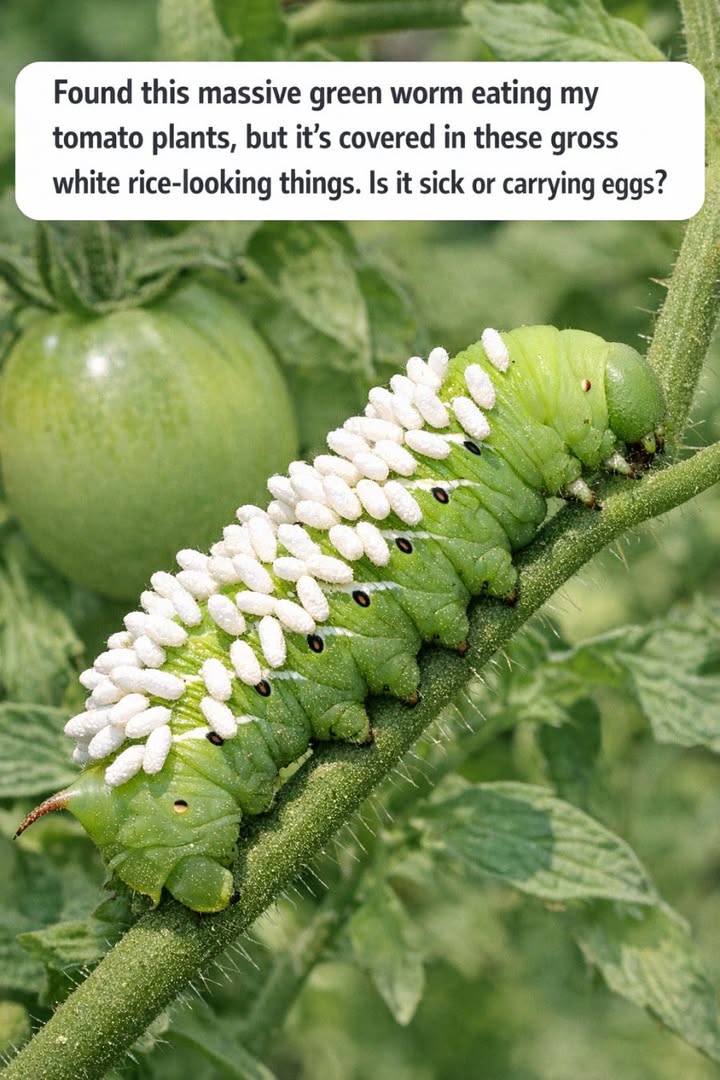
Found this massive green worm eating my tomato plants, but it’s covered in these gross white rice-looking things. Is it sick or carrying eggs?
Pages: 1 2
