
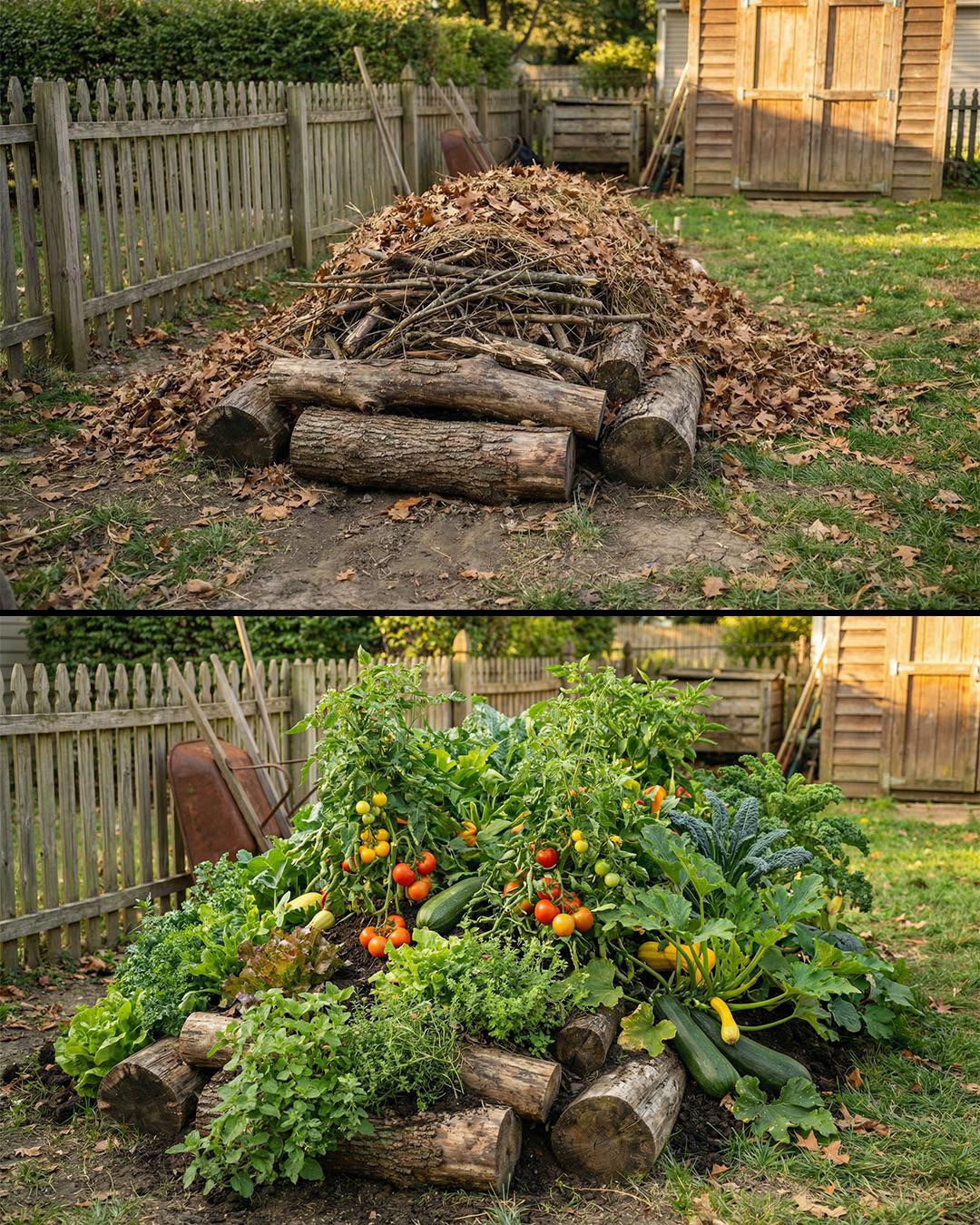
Hugelkultur (a German word meaning “hill culture”) is one of the most efficient ways to turn yard waste into a long‑lasting, productive garden bed. Instead of removing old wood, branches, and leaves, you bury them under soil to create a raised mound that feeds plants and stores water naturally.
A properly built hugelkultur mound can hold moisture for weeks without irrigation, improve soil structure year after year, and produce heavy harvests with minimal maintenance.
Below is a complete, practical guide to building, planting, and maintaining your own hugelkultur garden.
Why Hugelkultur Works So Well
Buried wood acts like a natural underground sponge.
As logs slowly decompose, they:
1. Base Layer – Logs and Thick Branches
Use:
Hardwood logs if possible (oak, beech, maple, fruit trees)
Thick branches and untreated wood
Avoid:
Painted or treated wood
Black walnut (can inhibit plant growth)
Tip: Slightly rotting wood is even better than fresh wood because it absorbs water faster.
Thickness: 20–40 cm (8–16 inches)
2. Second Layer – Smaller Wood Material
Add:
Thin branches
Twigs
Wood chips
Bark pieces
This layer fills air gaps and creates a strong structure.
3. Third Layer – Soft Organic Matter
Use any garden waste such as:
.
4. Top Layer – Compost and Garden Soil
Finish with:
Compost mixed with garden soil
Depth: 15–20 cm (6–8 inches)
This is where roots start growing and microbes become active.
Water the mound well after finishing to settle the layers.
Ideal Mound Shape and Dimensions
For best results:
