
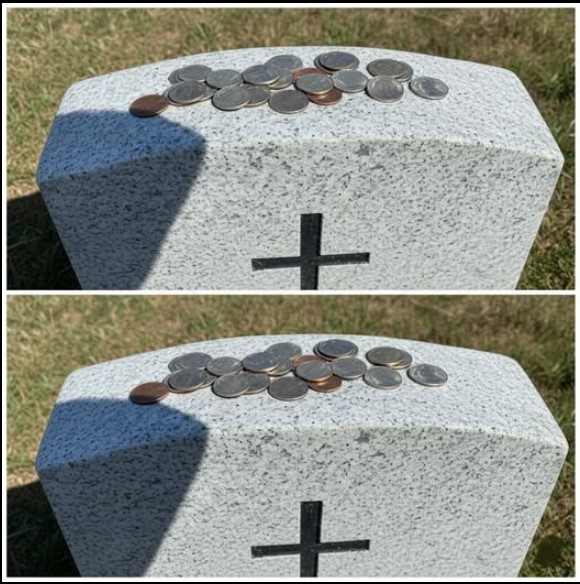
A Silent Language of Honor, Grief, and Remembrance
You’ve seen them—a single penny glinting on a weathered headstone, a nickel resting near a name, maybe even a quarter nestled among flowers.
At first glance, it might look like litter. Or an afterthought.
But in truth, every coin left on a grave is a deliberate message—a quiet, powerful language of respect, connection, and remembrance, especially in military cemeteries across the United States.
This tradition isn’t random. It’s steeped in history, coded with meaning, and deeply personal.
And once you understand it, you’ll never walk past a coin on a grave the same way again.
🕊️ Origins: From Ancient Rites to Modern Grief
The practice of leaving coins for the dead dates back thousands of years.
The practice of leaving coins for the dead dates back thousands of years.
In ancient Greek and Roman cultures, a coin (often an obol) was placed in the mouth or on the eyes of the deceased to pay Charon, the ferryman who carried souls across the River Styx to the afterlife. Without it, the soul might wander forever.
Fast-forward to the Vietnam War era, and the tradition took on new meaning.
During a time of deep political division, many Americans were conflicted about the war. Veterans who wanted to honor fallen comrades—but didn’t want to leave flowers (which could be seen as political) or risk confrontation—began leaving coins instead.
