
Hydrangeas are beloved for their lush blooms and vibrant colors, making them a favorite in many gardens. However, as the warm months approach, maintaining their health becomes increasingly challenging. One of the most critical factors in ensuring that your hydrangeas thrive is proper watering. Without the right moisture levels, you risk ending up with crispy leaves and dropped buds, which can dampen the beauty of your garden.
By making a few strategic adjustments to your watering routine this May, you can set your hydrangeas up for success throughout the summer. These changes are not only simple but also highly effective in preventing common issues caused by improper watering. Let’s dive into nine essential watering strategies that will keep your hydrangeas looking their best all season long.
1. Start Deep, Not Daily: Reset Spring Soil Moisture in Early May
In early May, give your hydrangeas a deep watering to establish a solid moisture foundation for the summer. Instead of frequent, shallow watering, focus on saturating the soil to a depth of at least 6 to 8 inches. This encourages the roots to grow deeper, making the plants more resilient to drought conditions.
To achieve this, water your hydrangeas thoroughly once a week, allowing the water to penetrate deeply into the soil. Use a soaker hose or a slow-running garden hose to ensure even distribution and avoid runoff. This deep watering method helps maintain consistent soil moisture and reduces the risk of water stress as temperatures rise.
2. Switch to Morning-Only Watering Before Heat Really Hits
Watering your hydrangeas in the morning is crucial as it allows the plants to absorb moisture before the heat of the day sets in. Early watering also minimizes evaporation, ensuring that more water reaches the roots where it’s needed most.
Begin this routine in May, before the temperatures climb too high. Aim to water between 6 a.m. and 10 a.m., giving the foliage time to dry out before evening. This practice not only reduces the risk of fungal diseases but also ensures that your hydrangeas have enough moisture to withstand the midday sun.
3. Trade Sprinklers for Soaker Hoses to Keep Leaves From Crisping
Sprinklers can lead to wet foliage, which increases the risk of leaf burn and disease. To keep your hydrangeas healthy, switch to soaker hoses that deliver water directly to the soil and roots.
Position the soaker hoses around the base of your hydrangeas, ensuring even coverage without wetting the leaves. This method not only conserves water but also protects the plants from the crispy leaves caused by sun exposure on wet foliage. Regularly check the hoses for clogs and adjust the flow to maintain consistent soil moisture.
4. Use the Finger Test: The Simple Moisture Check That Prevents Stress
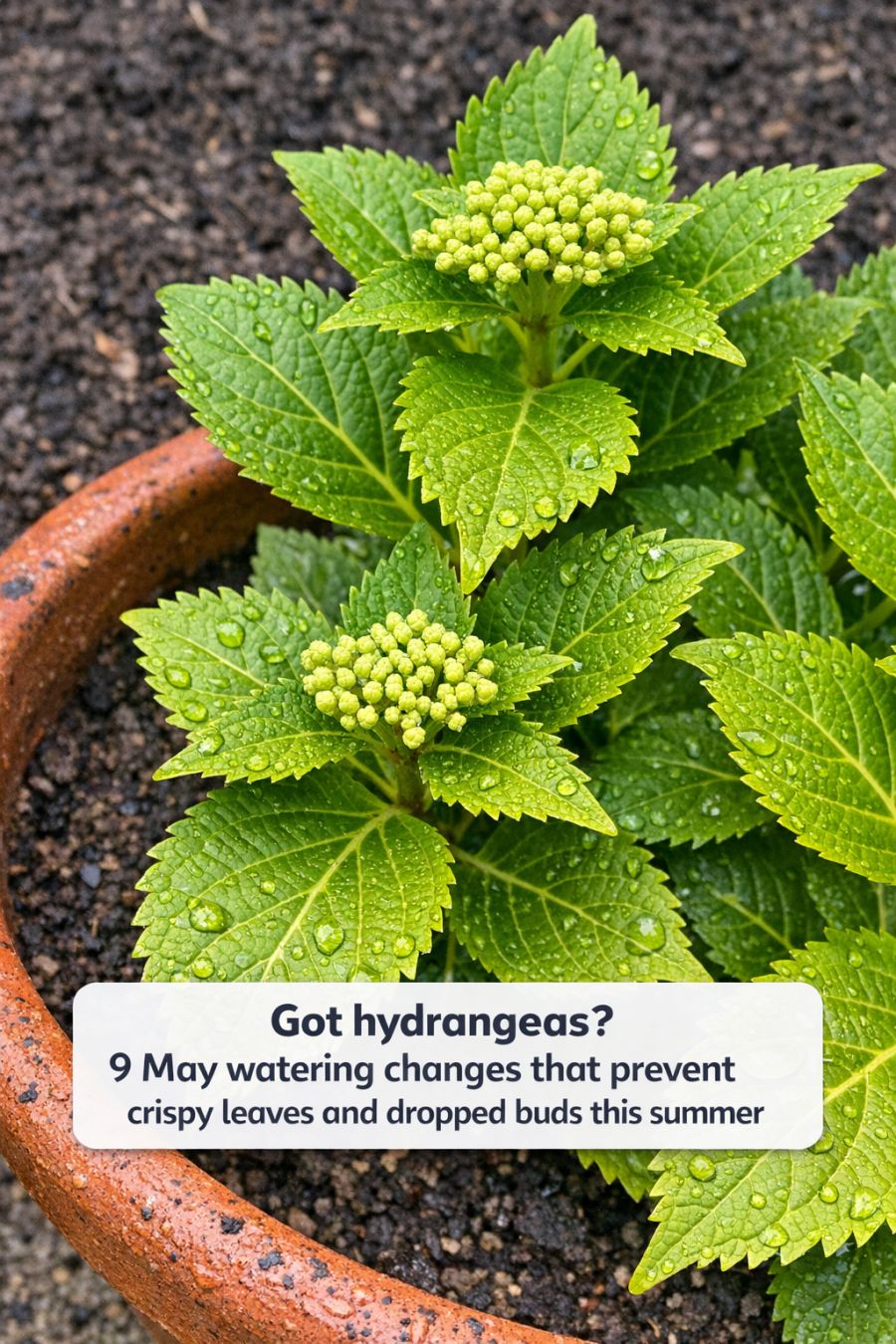
Got hydrangeas? 9 May watering changes that prevent crispy leaves and dropped buds this summer
Pages: 1 2
