
Lilies are among the most desired flowering plants for gardens, known for their towering stature and intoxicating fragrance. As spring heralds the start of the growing season, ensuring your lilies reach their full potential requires some dedicated care and attention. With the right steps, your garden can be filled with giant, fragrant blossoms that captivate the senses and bring vibrant life to your outdoor space.
Whether you’re a seasoned gardener or a novice lily enthusiast, understanding the critical steps to cultivate these magnificent flowers will help you achieve stunning results. From selecting the perfect varieties to nurturing them throughout the growing season, this guide will walk you through the essential actions to take this spring for a breathtaking lily display.
1. Start With the Right Lilies for Big, Fragrant Blooms
To achieve large, fragrant blooms, it’s crucial to select lily varieties known for their size and scent. Oriental lilies are celebrated for their large flowers and strong fragrance, while trumpet lilies are also a great choice for their towering height and aromatic presence. Consider varieties such as ‘Stargazer’, ‘Casablanca’, or ‘Regale’ for impressive results.
When purchasing lily bulbs, opt for firm, plump specimens that show no signs of mold or damage. Larger bulbs generally produce stronger plants and bigger blooms. Aim to plant bulbs that are at least 12-14 cm in circumference for the best chance of growing robust lilies.
2. Choose a Sunny, Wind-Sheltered Spot They Can Tower In
Lilies thrive in full sun, requiring at least 6-8 hours of direct sunlight each day to develop strong stems and lush blooms. Select a location in your garden that is sheltered from strong winds, which can topple tall stems and damage flowers.
If your garden is exposed, consider planting lilies near a fence or hedge that can provide some protection from gusty conditions. This will not only help maintain the structural integrity of the plants but also enhance their overall health and blooming potential.
3. Prep Deep, Rich, Free-Draining Soil They’ll Love
Lilies prefer well-draining soil that is rich in organic matter. Before planting, amend the soil with plenty of compost or well-rotted manure to improve its fertility and structure. Aim for a soil pH between 6.0 and 6.5, which is slightly acidic and ideal for lily growth.
Ensure that the planting area has good drainage to prevent waterlogging, which can lead to bulb rot. If your soil is heavy clay, consider raising the bed or adding sand or perlite to improve its drainage capabilities.
4. Plant Bulbs at the Perfect Depth and Spacing
Proper planting depth and spacing are critical for lily growth. Plant lily bulbs 6-8 inches deep, with the pointed end facing upward. This depth helps anchor the plant and protect it from temperature fluctuations.
Space the bulbs at least 12-18 inches apart to allow for good air circulation and reduce the risk of disease. This spacing also gives the plants room to grow and develop their full size without competition for nutrients and water.
5. Feed for Giant Flowers: Spring Fertilizer Timing and Types
To fuel the growth of large, fragrant blooms, fertilize your lilies at the start of the growing season. Use a balanced, slow-release fertilizer with an N-P-K ratio of 10-10-10 or 5-10-10. Apply the fertilizer as soon as new growth appears in the spring, following the package instructions for the appropriate amount.
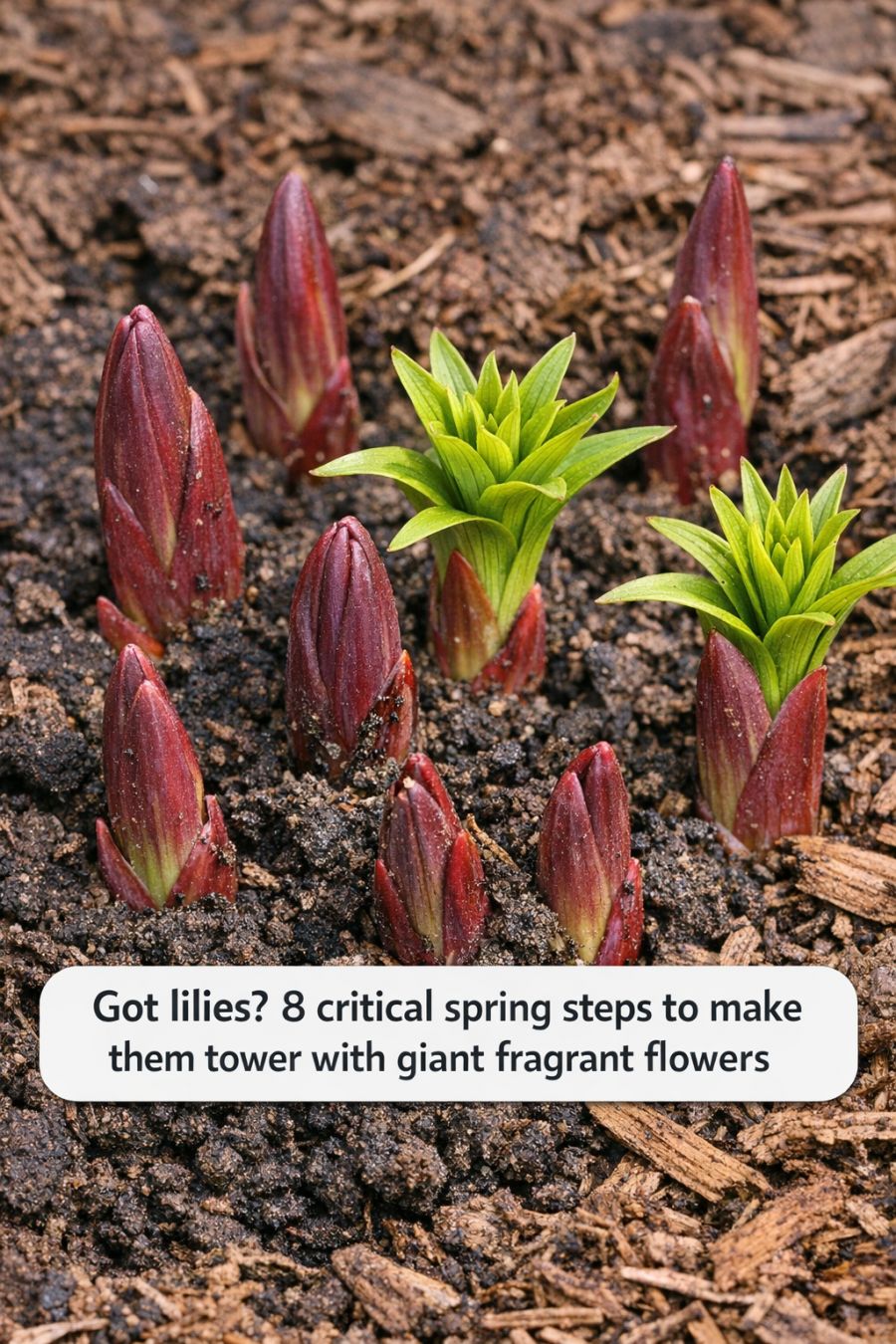
Got lilies? 8 critical spring steps to make them tower with giant fragrant flowers
Pages: 1 2
