
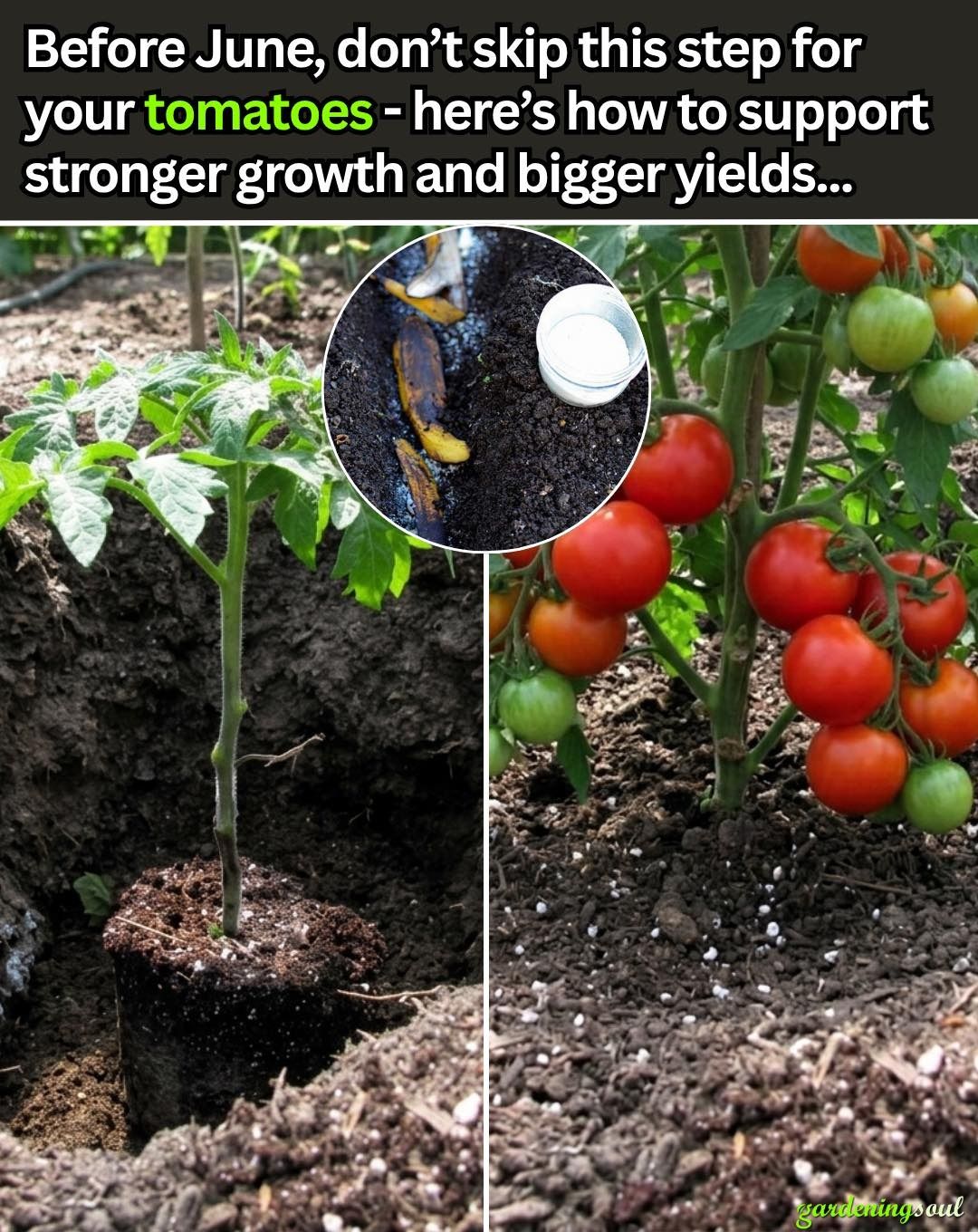
Tomatoes have a reputation for being both easy and demanding at the same time. They grow quickly, respond fast to care, and can produce incredible harvests – but only if the early stages are handled correctly.
The period before June is where most of that success is decided.
By the time summer truly begins, your tomato plants are no longer preparing – they are already performing. They are setting flowers, building fruit, and dealing with rising temperatures.Flora & Fauna
If they enter this stage weak or unbalanced, they will struggle for the rest of the season. If they enter it strong, they will reward you with steady growth, better fruit set, and richer flavor.
Discover more
Flora & Fauna
Fences
Trees
This is why everything you do in late spring matters so much. It’s not about doing more work – it’s about doing the right work at the right time.
Understanding What Your Tomato Plant Is Doing Right Now
Before June, tomato plants are in a transition phase. They are moving from establishment into active production.
During this time, the plant is building its entire structure – roots are expanding outward and downward, stems are thickening, and leaves are forming at a rapid pace.
At the same time, the plant is quietly preparing for flowering. Even if you don’t see blooms yet, the internal process has already started. The stronger and more balanced the plant is during this stage, the more flowers it will produce – and the more fruit those flowers will turn into later.
If growth is uneven, roots are shallow, or the plant is stressed, it will limit how much energy it invests into fruiting. That’s why early care is not just helpful – it’s decisive.
Build the Soil So the Plant Doesn’t Struggle Later
Everything begins with the soil. Tomatoes are heavy feeders, but more importantly, they are sensitive to soil structure.Flora & Fauna
Discover more
fence
Shrubs & Bushes
Trees
If the soil is too compact, roots cannot expand. If it drains poorly, roots suffocate. If it lacks organic matter, nutrients are inconsistent.
Before June, the soil should feel loose, slightly moist, and rich in organic material. When you press it, it should hold shape but break apart easily. This balance allows roots to move freely while still accessing water and nutrients.
Adding compost at this stage does more than feed the plant. It improves the soil’s ability to hold moisture evenly, which is critical as temperatures begin to rise.
It also supports beneficial microorganisms that help break down nutrients into forms the plant can absorb.
Discover more
Fences
fence
Shrubs & Bushes
When the soil is right, the plant doesn’t have to struggle – and when the plant doesn’t struggle, it grows faster.
Train the Roots to Go Deep, Not Wide
One of the biggest differences between average tomato plants and high-performing ones is root depth.
Tomatoes naturally want to grow deep roots, but they will only do so if conditions encourage it. If water is always available near the surface, roots stay shallow. This makes the plant more vulnerable to heat and drought later.
Discover more
Trees
Fences
fence
Before June, watering should be done deeply and less frequently. When water penetrates deeper into the soil, roots follow it.
Over time, this creates a plant that is more stable, more resilient, and better able to access nutrients.
A deeply rooted tomato plant can handle fluctuations in temperature and moisture far better than one that depends on surface watering. This becomes especially important as summer heat intensifies.
Give the Plant Structure Before It Needs It
Tomatoes grow faster than most people expect. What looks manageable in May can become overwhelming by June.Flora & Fauna
Discover more
Shrubs & Bushes
fence
Trees
If support is added too late, stems may already be bending, twisting, or breaking under their own weight. Installing stakes, cages, or trellises early allows the plant to grow naturally into its support system.
