
Gardening is a rewarding hobby that brings joy and satisfaction to many. However, it also comes with its set of challenges, especially when pests attack your beloved plants. One such common problem faced by gardeners is seeing their green bean plants being ravaged overnight, leaving only the veins of the leaves behind. This phenomenon often leaves gardeners puzzled and concerned about the health of their plants.
When you observe that your green bean leaves have been transformed into what looks like lace or skeletons, it’s a clear sign that something is amiss. Identifying the culprit is the first step in addressing the problem, and understanding the cause can help gardeners protect their plants effectively. This article explores what causes this damage and offers insights into managing and preventing this issue.
1. Why Your Green Bean Leaves Look Like Skeletons Overnight
If you’ve noticed your green bean leaves looking like delicate lacework, it’s due to a specific type of feeding damage called skeletonization. This happens when pests eat the leaf tissues between the veins, leaving a network of veins intact. This type of damage is not only unsightly but can also severely affect the plant’s ability to photosynthesize, weakening it over time.
Skeletonization can occur rapidly, sometimes within a matter of days, especially when pest populations are high. The most common culprits for this specific type of damage are Japanese beetles, which have a voracious appetite for a variety of plants, including green beans.
2. Meet the Culprit: What Are Japanese Beetles?
Japanese beetles (Popillia japonica) are a highly destructive pest native to Japan but have spread to many parts of the world. They are about 1/2 inch long and have a distinctive metallic green body with copper-brown wing covers. These beetles are notorious for their feeding habits and can cause significant damage to plants by feeding on their foliage, flowers, and fruits.
Adult Japanese beetles are active from late spring through summer, and during this time, they can be found in large numbers on host plants. Their feeding habits not only lead to skeletonized leaves but can also result in reduced yields and overall plant vigor.
3. How Japanese Beetles Skeletonize Green Bean Leaves
Japanese beetles feed on the upper surfaces of leaves, chewing the tissue between the veins. This results in the characteristic skeletonized appearance as they leave the larger veins of the leaf intact. The beetles are most active during the warmest parts of the day, and they tend to congregate in groups, which can lead to intense localized damage.
In addition to direct feeding damage, the presence of Japanese beetles can attract more beetles due to the release of pheromones, exacerbating the problem. This makes it important for gardeners to address infestations quickly to prevent extensive damage.
4. Key Signs That Confirm Japanese Beetle Damage
Several signs can confirm that Japanese beetles are responsible for the damage to your plants. The most obvious sign is the skeletonized appearance of the leaves. Additionally, you may notice the presence of the beetles themselves, often grouped together on the foliage.
Another sign is the presence of beetle droppings, which can be seen on the leaves or the ground beneath the plants. Japanese beetles are also attracted to sunlight, so you may observe increased activity during sunny days.
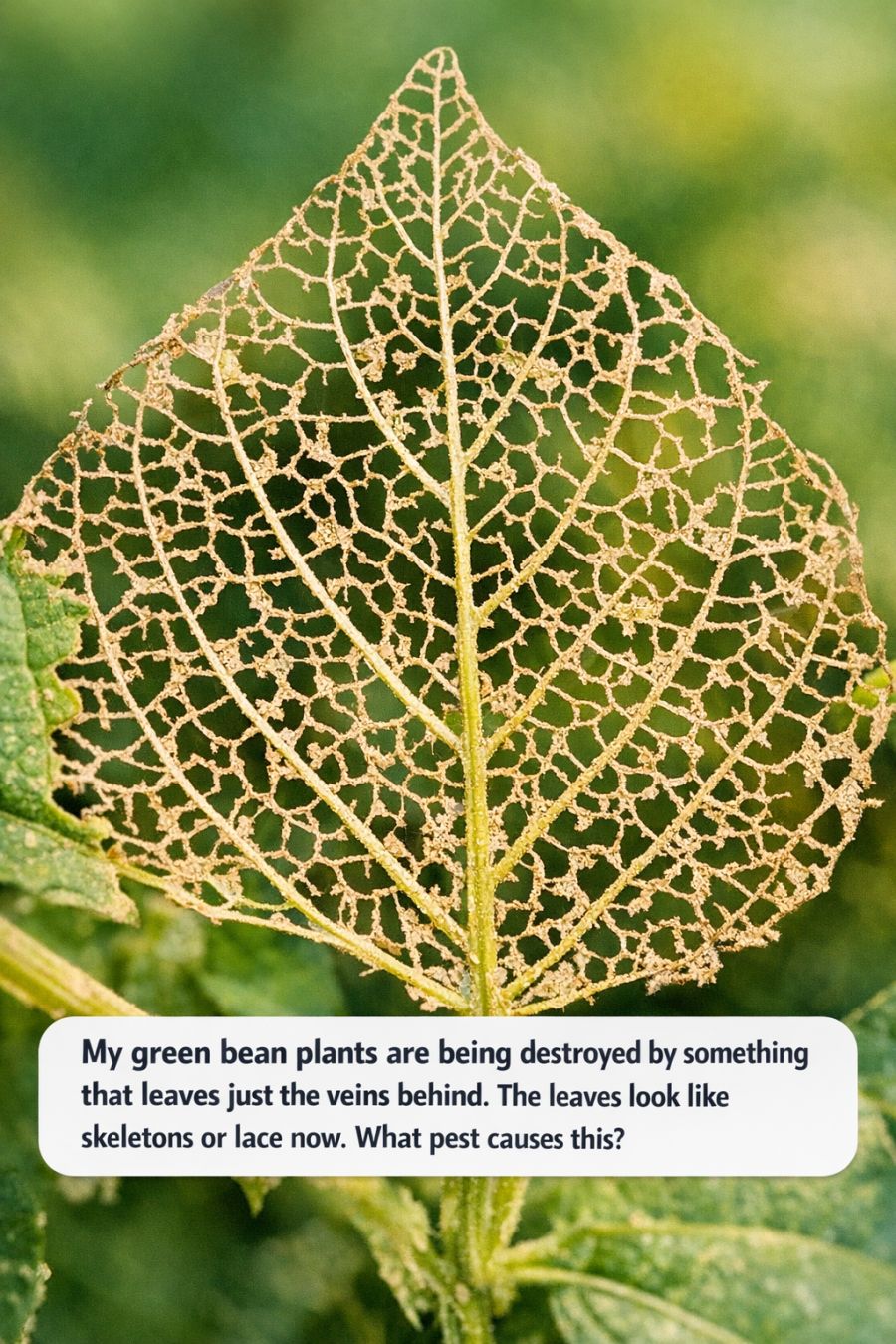
My green bean plants are being destroyed by something that leaves just the veins behind. The leaves look like skeletons or lace now. What pest causes this?
Pages: 1 2
