
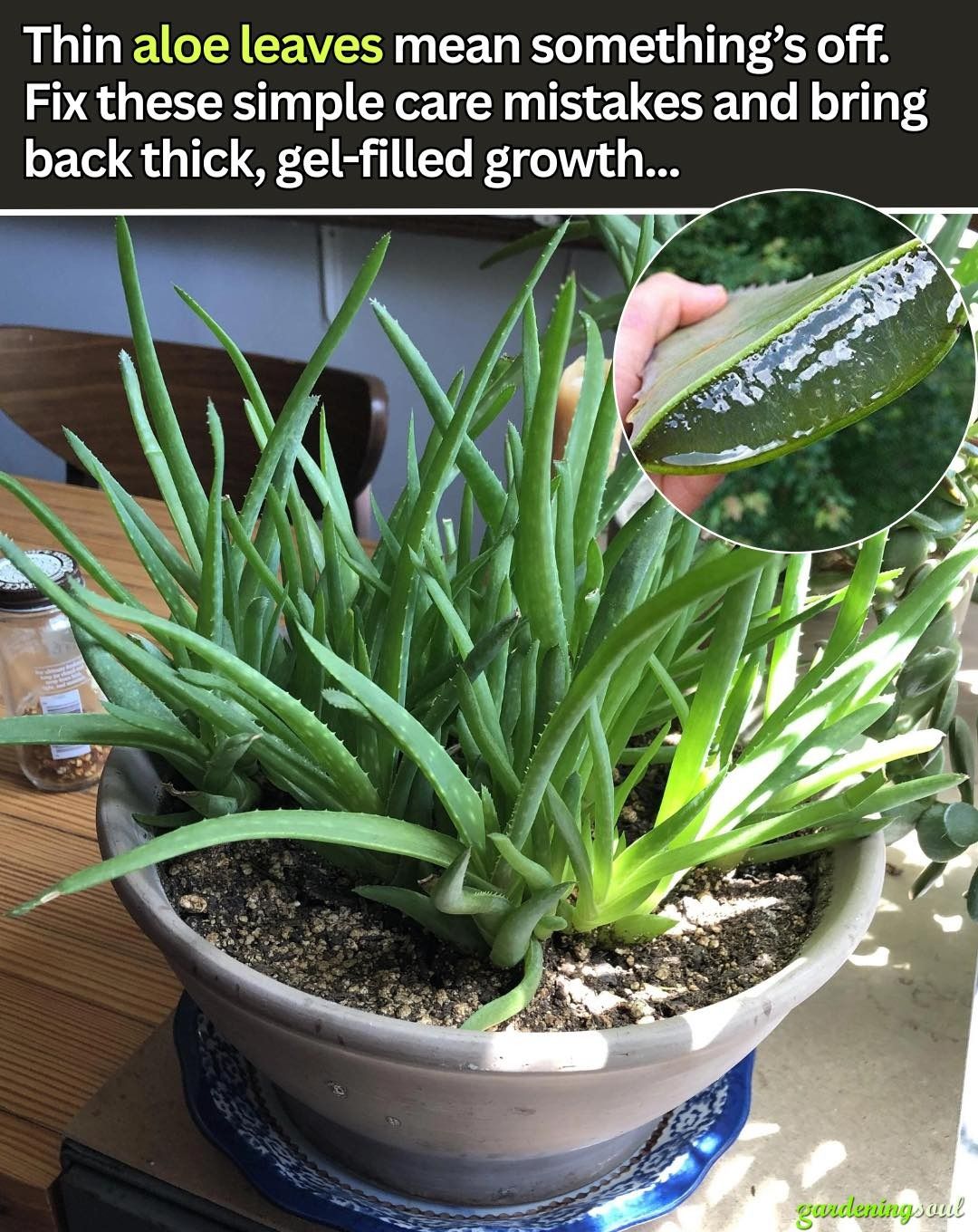
Aloe vera is one of the most popular succulent plants in the world, and for good reason.
Not only does it make a beautiful, low-maintenance houseplant, but its thick, fleshy leaves are packed with soothing gel that’s used for everything from skin care to natural remedies.
But what if your aloe vera looks less like a plump, thriving succulent and more like a thin, droopy plant with flat, floppy leaves?Flora & Fauna
Thin aloe vera leaves are a common problem that frustrates many plant owners, but the good news is that it’s almost always fixable with the right care.
Why Are My Aloe Vera Leaves Thin and Droopy?
A healthy aloe vera plant should have thick, firm leaves that feel almost rubbery to the touch. When leaves become thin, limp, or wrinkled, it’s a sign that your plant isn’t getting what it needs.
Discover more
Shrubs & Bushes
Flora & Fauna
Horticulture
Here are the most common reasons aloe vera leaves become thin:Flora & Fauna
1. Not Enough Sunlight
Aloe vera is a sun-loving succulent native to hot, sunny regions. In low light conditions, your aloe plant can’t photosynthesize properly.
Without adequate energy, it struggles to produce the thick, fleshy leaves it’s known for.
Signs of insufficient light:
Leaves stretching or leaning toward the light
Pale or faded leaf color
Thin, floppy growth
2. Overwatering
Aloe vera stores water in its leaves to survive drought. When you water too often, the roots can’t dry out between waterings, leading to root rot.
Discover more
Alternative & Natural Medicine
Gardening
Bush
In the early stages of overwatering, leaves may look mushy. Eventually, the plant will shrivel because damaged roots can’t absorb water effectively.Flora & Fauna
Signs of overwatering:
Leaves soft and mushy at the base
Black or brown spots on leaves
An unpleasant smell from the soil
Roots turning brown or black
3. Underwatering
While aloe plants are drought-tolerant, they still need some water to maintain thick leaves. Prolonged dryness can cause leaves to flatten and wrinkle as the plant uses up its stored water.
Discover more
Shrubs & Bushes
bush
Flora & Fauna
Signs of underwatering:
Leaves thin and shriveled
Curling or folding leaves
Slow growth
4. Small or Crowded Pot
Aloe vera needs room to grow. If your aloe is root-bound, it can’t absorb enough water and nutrients to produce plump leaves. Overcrowded roots also restrict airflow and drainage.Flora & Fauna
5. Poor Soil
Heavy or compacted soil retains too much moisture, leading to root issues. Aloe vera needs fast-draining soil to keep roots healthy and leaves thick.
6. Temperature Stress
Aloe vera thrives in warm conditions. Cold temperatures or sudden drafts can slow growth and cause leaves to lose their plumpness.
How to Get Thick Aloe Vera Leaves
Now that you know why your aloe leaves might be thin, let’s talk about how to help your plant produce those thick, juicy leaves everyone loves.
1. Give Aloe Plenty of Sunlight
The single best thing you can do for thicker aloe leaves is to increase the amount of light your plant receives.Flora & Fauna
Place your aloe vera near a bright, south-facing window.
If growing indoors, provide at least 6 hours of direct sunlight daily.
In low-light homes, supplement with a grow light.
Outdoors, aloe prefers bright sun but will tolerate partial shade in extremely hot climates.
The more light your aloe receives (without scorching), the more energy it has to produce healthy, thick leaves.
2. Adjust Your Watering Routine
Proper watering is crucial for plump aloe leaves.
Discover more
bush
Shrubs & Bushes
Bush
Here’s how to get it right:
Allow the soil to dry out completely between waterings.
Water deeply until water drains from the bottom of the pot.
In summer, water about every 2-3 weeks. In winter, reduce to once every 4-5 weeks.
Always check the soil moisture with your finger before watering.
If in doubt, it’s safer to underwater aloe vera than to overwater it.Flora & Fauna
3. Use the Right Soil
Aloe vera needs soil that drains quickly to prevent root rot. Regular potting soil is often too dense.
Discover more
Gardening
Alternative & Natural Medicine
Horticulture
The best soil for aloe vera:
Cactus or succulent soil mix
Or make your own by mixing: 2 parts potting soil, 1 part perlite or pumice, 1 part coarse sand.
Good drainage ensures roots stay healthy and able to support thick, juicy leaves.
4. Choose the Right Pot
Aloe vera plants prefer a pot with plenty of room for root growth. A pot that’s too small can restrict the plant and keep leaves thin.Flora & Fauna
Use a pot at least 1-2 inches wider than the current root ball.
Always choose pots with drainage holes.
Terracotta pots are excellent because they allow moisture to evaporate more quickly.
If your aloe has been in the same pot for years, consider repotting to refresh the soil and give roots more space.
5. Feed Sparingly
Aloe vera doesn’t require heavy feeding, but occasional fertilizer helps promote lush growth.
Feed with a diluted cactus or succulent fertilizer once in spring and once in summer.
Avoid high-nitrogen fertilizers, which can cause soft, weak leaves.
6. Protect From Extreme Cold
Aloe vera prefers warm temperatures between 60-80°F (15-27°C). Cold drafts or frost can cause leaves to become thin and stressed.
Keep indoor aloe plants away from drafty windows in winter.
If growing aloe outdoors in cooler regions, bring plants inside before temperatures drop below 50°F (10°C).
7. Keep It Clean
Dust and debris on aloe leaves reduce their ability to absorb sunlight. Gently wipe leaves with a damp cloth to keep them clean and photosynthesizing efficiently.Flora & Fauna
