
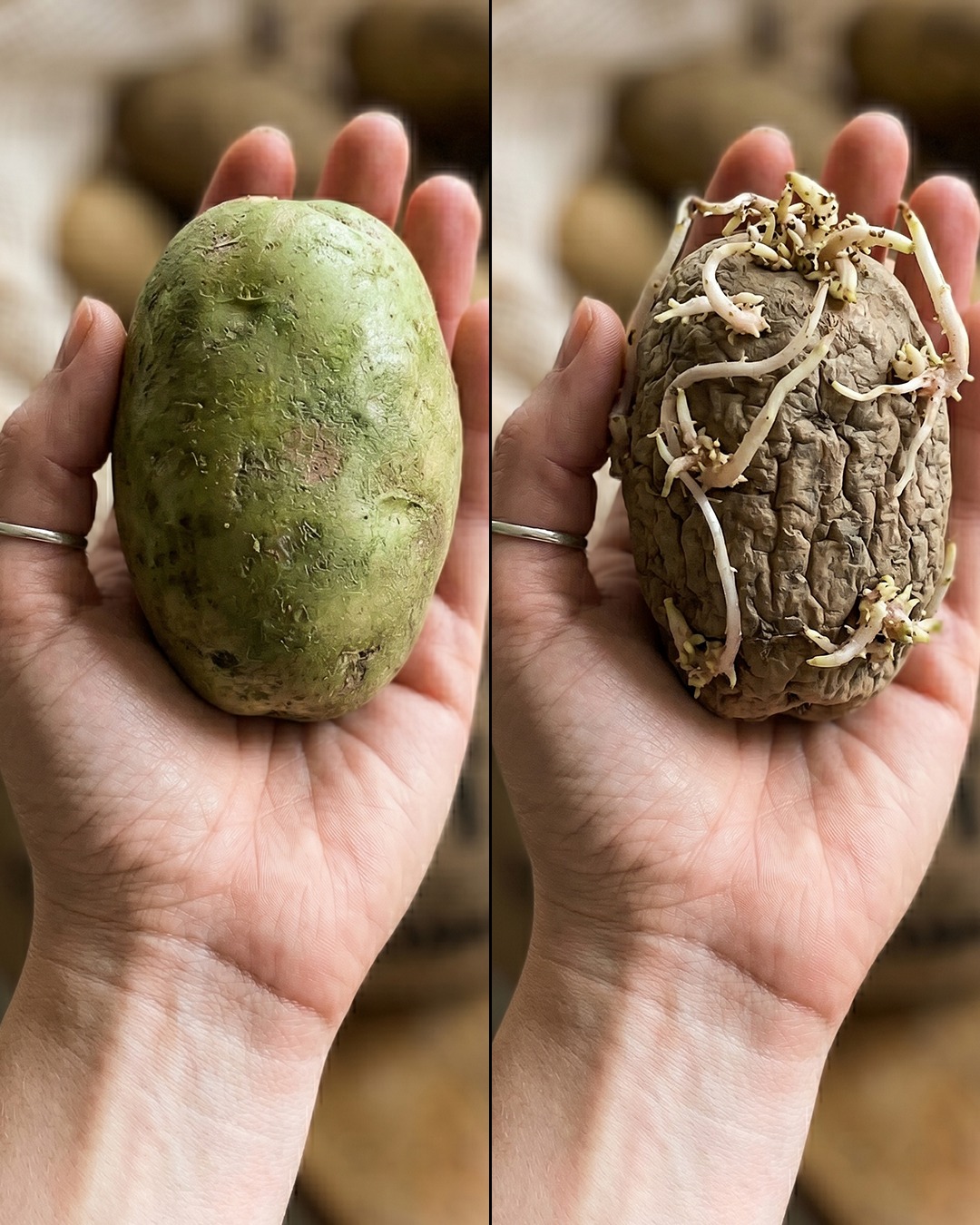
Potatoes are a staple food in almost every kitchen around the world. They are cheap, filling, and incredibly versatile for homemade meals. However, despite how often we eat them, there are several rules about storing, preparing, and eating potatoes that most people do not know. Understanding these simple facts can help you get the most out of your food while keeping your family safe from surprising natural toxins.
1. Green Potatoes Contain a Potent Toxin
The Cause: When potatoes are left out in the light, they start to turn green. This green color is chlorophyll, which is harmless on its own. However, the light also causes the potato to produce a potent natural toxin called solanine.
The Danger: Eating too much solanine can cause severe stomach aches, nausea, and headaches.
The Solution: Cooking does not destroy solanine. If the green spot is small, you can peel it away deeply until you reach normal flesh. If the potato is very green or tastes bitter after cooking, you must throw it away.
2. Sprouts Are Also Toxic
The Cause: When a potato sits for a long time, it tries to grow into a new plant by pushing out sprouts. To protect these vulnerable new shoots, the potato sends high levels of solanine into the sprouts and the “eyes” (the dimples where sprouts grow).
The Danger: Eating the sprouts or the flesh immediately surrounding them can make you sick.
The Solution: If the potato is still hard and firm, simply cut out the entire sprout and the eye. The rest of the potato is safe to eat. If the potato has become soft, squishy, or heavily wrinkled, the toxins have spread, and you should discard it.
3. The Refrigerator Ruins ThemThe Cause: Many people put potatoes in the fridge to make them last longer, but the cold temperature quickly turns the potato’s complex starches into raw sugars.
The Danger: When you bake, roast, or fry these cold-stored potatoes at high heat, those extra sugars react to form a dangerous chemical called acrylamide, which is a known health risk.
The Solution: Always store your potatoes in a cool, dark, and dry place like a pantry or a lower cabinet. Never put them in the refrigerator.
4. Onions Are Their Worst Enemy
