
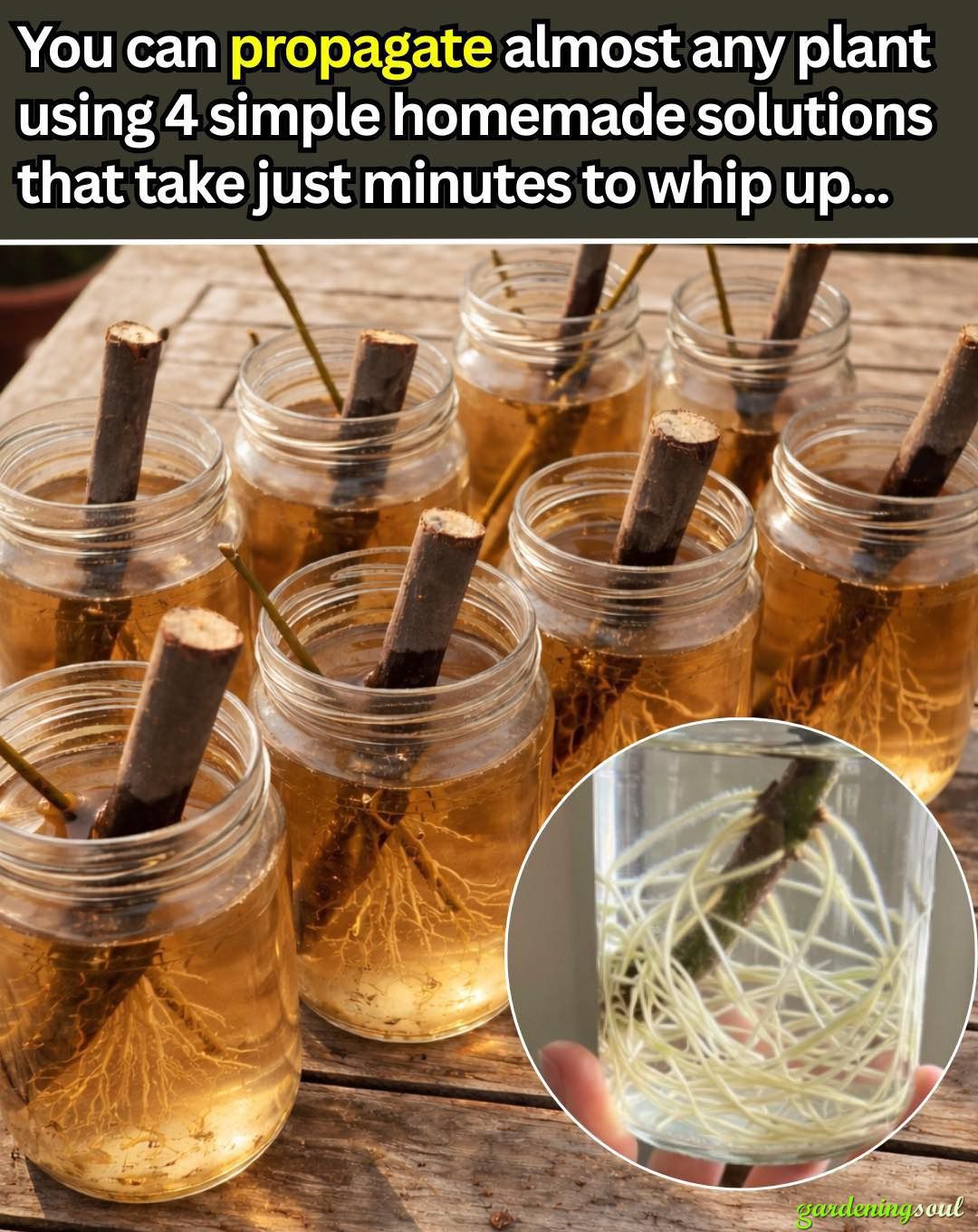
Why Rooting Solutions Help Cuttings Succeed
When a cutting is taken from a plant, it loses access to water and nutrients through its roots. Until new roots form, the cutting is vulnerable to dehydration, rot, and infection.Flora & Fauna
Rooting solutions help by:
Protecting the cut surface
Reducing bacterial and fungal problems
Supporting cell regeneration
Encouraging faster root initiation
Natural solutions don’t replace good technique, but they significantly improve success rates, especially for softwood and semi-hardwood cuttings.
1. Honey Water Rooting Solution
Honey is one of the oldest natural rooting aids used by gardeners.
Why honey works
Honey has natural antibacterial and antifungal properties. When applied to a cutting, it helps protect the stem from infection while roots are forming.
Discover more
Gardening
Horticulture
Bush
While honey doesn’t contain rooting hormones, it creates a clean, supportive environment for root development.
How to make it
Mix one teaspoon of raw honey into one cup of lukewarm water until fully dissolved.
How to use it
Dip the cut end of the plant into the honey solution, then plant it immediately into moist soil or a propagation medium.Flora & Fauna
Best plants for honey
Soft-stem herbs
Houseplants like pothos and philodendron
Ornamental cuttings
Honey works best for plants that root easily but benefit from extra protection.Flora & Fauna
2. Aloe Vera Rooting Gel
Aloe vera is one of the most effective natural rooting aids – and one of the easiest to use.
Why aloe works
Aloe vera contains enzymes, amino acids, and natural plant compounds that support cell growth. It also has mild antimicrobial properties and helps keep cuttings hydrated.
Discover more
bush
Flora & Fauna
shrubs
Unlike many solutions, aloe acts as both a root-supporting gel and a moisture buffer, reducing stress on the cutting.
