
12. Horseradish: Fiery Roots That Spread and Strengthen Each Year
Horseradish is a vigorous perennial known for its pungent roots, which are used to make the popular condiment. Emerging in early spring, horseradish plants produce large, leafy greens that can reach heights of 3 feet or more. The roots are typically harvested in the fall, but the plant’s resilience and ability to spread make it a reliable perennial crop.
Horseradish thrives in well-drained soil and full sun. Once established, it can spread aggressively, so it’s often best grown in a contained area. A single plant can yield several pounds of roots annually, which can be grated fresh or processed for long-term storage. Regular harvesting and root division can help manage the plant’s spread.
13. Welsh Onions: Clump-Forming Scallions for Repeated Harvests
Welsh onions, also known as bunching onions, are perennial alliums that form clumps of tender green stalks. Unlike bulb-forming onions, Welsh onions are grown for their flavorful leaves, which can be harvested repeatedly throughout the growing season.
Welsh onions are hardy and can thrive in a variety of soil conditions. In early spring, they produce fresh shoots that can be used like scallions. Each clump can yield several ounces of green onions per season, and the plants can continue producing for many years. Regular division of the clumps helps maintain vigor and productivity.
14. French Sorrel: Tender, Tangy Leaves Before Lettuce Season
French sorrel is a perennial herb known for its delicate, tangy leaves that add a bright flavor to salads and sauces. Emerging in March, French sorrel is one of the first greens to appear, offering a welcome taste of spring before the lettuce season begins.
French sorrel prefers well-drained soil and full sun to partial shade. Once established, it can produce for several years, with each plant yielding up to a pound of leaves per season. Regular harvesting encourages new growth and prevents the plant from flowering too early. Sorrel’s lemony flavor makes it a versatile addition to a variety of dishes.
15. Groundnut (Apios Americana): A Native Vine With Protein-Rich Tubers
Groundnut is a native North American vine known for its edible tubers, which are rich in protein and nutrients. The plant emerges in early spring, producing lush foliage and fragrant flowers reminiscent of sweet peas. Groundnut is a traditional food source for many indigenous peoples and is experiencing a resurgence in interest due to its nutritional value.
Groundnut prefers moist, fertile soil and can thrive in both sun and shade. The tubers develop along the vine’s underground rhizomes and can be harvested in late fall or early spring. Each plant can produce multiple tubers, which can be boiled, roasted, or used in soups. Groundnut’s ability to fix nitrogen also benefits the soil, making it a valuable addition to permaculture systems.
16. Daylilies: Edible Shoots, Buds, and Flowers From Rugged Plants
Daylilies are hardy perennials known for their vibrant flowers, but they also offer edible shoots, buds, and blooms. Emerging in early spring, daylilies produce tender shoots that can be harvested and used like asparagus. As the plants mature, the unopened flower buds and blossoms can be used in salads and stir-fries.
Daylilies thrive in a wide range of conditions, including poor soil and drought. Each plant can yield several ounces of edible shoots, buds, and flowers per season. Regular harvesting of the buds and flowers can prolong the blooming period and encourage more growth. With their beauty and versatility, daylilies are a valuable addition to any edible landscape.
17. Ramps (Wild Leeks): Foraged Flavor You Can Naturalize at Home
Ramps, or wild leeks, are a sought-after spring delicacy with a distinctive garlicky flavor. These perennial alliums emerge in March, with broad leaves that can be harvested for a brief period before the plants go dormant in early summer. Ramps are traditionally foraged in the wild, but they can be cultivated in home gardens under the right conditions.
Ramps prefer shady, moist environments and rich, well-drained soil. Once established, they can form dense colonies, with each plant yielding a few ounces of leaves and bulbs annually. Sustainable harvesting practices are essential to ensure the continued health of ramp populations, whether in the wild or in cultivation.
18. Garlic Chives: Flat-Leaved Alliums That Rebound Every Spring
Garlic chives, also known as Chinese chives, are a perennial herb with a mild garlic flavor. Emerging in early spring, they produce flat, grass-like leaves that can be harvested throughout the growing season. In late summer, garlic chives produce edible white flowers that attract pollinators.
Garlic chives thrive in well-drained soil and full sun to partial shade. A mature clump can yield several ounces of leaves per season, providing a steady supply for culinary use. Regular division of the clumps every few years helps maintain plant vigor and productivity. Garlic chives are not only valued for their flavor but also for their ornamental appeal in the garden.
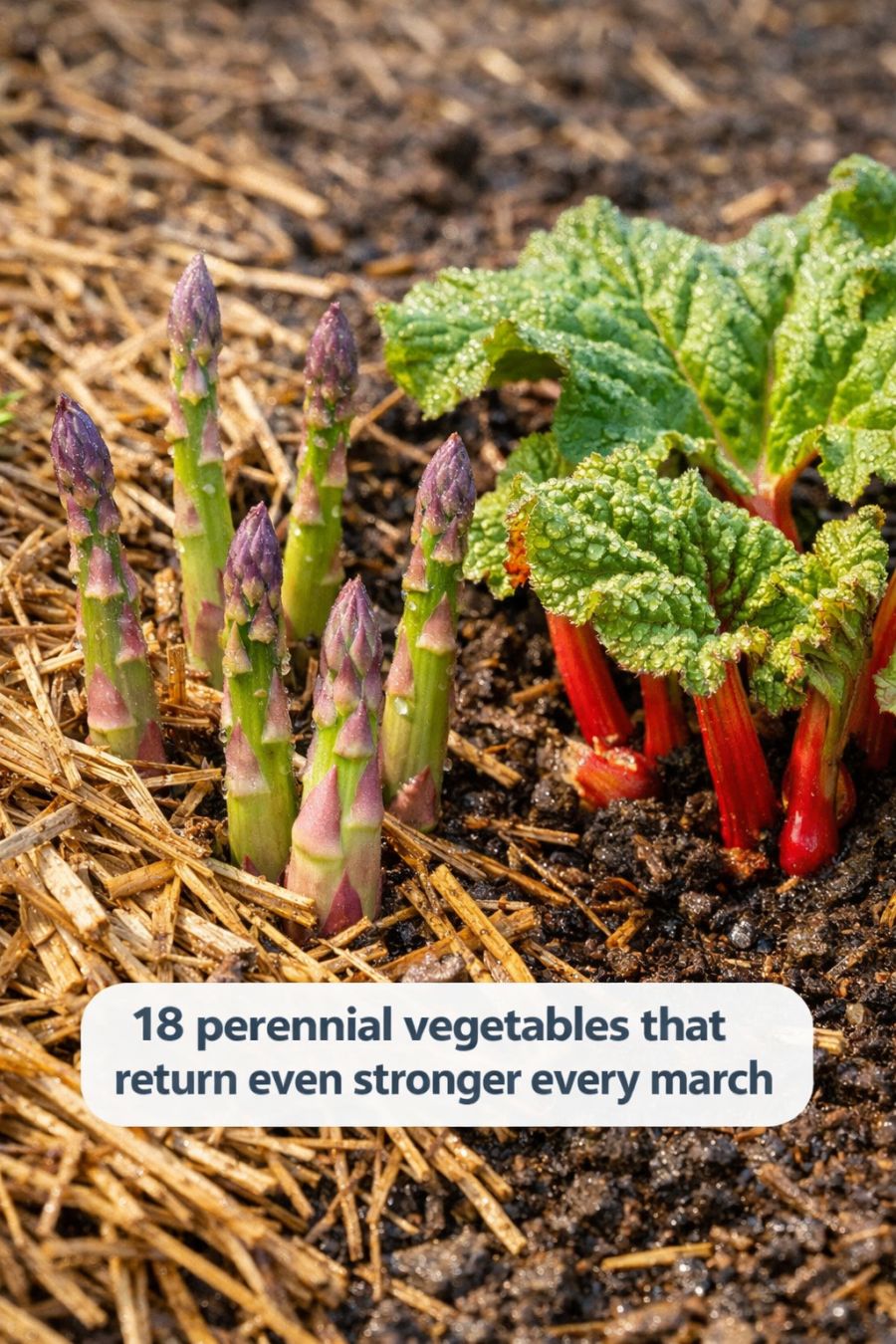
18 perennial vegetables that return even stronger every march
Pages: 1 2
