
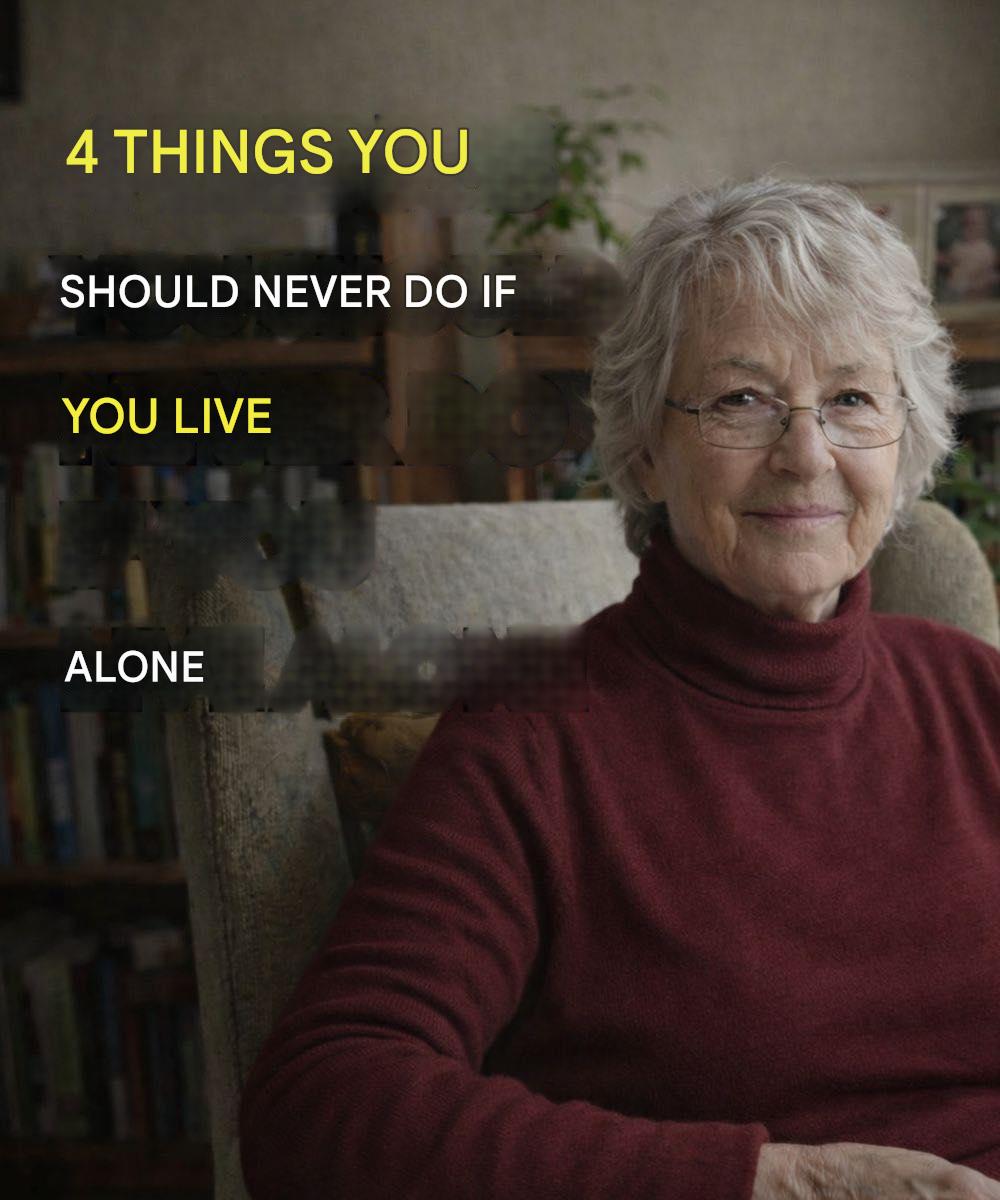
I’m 73 years old and I’ve been living alone for eight years. It wasn’t planned or desired. Things just happened. At first, I was afraid. I feared that loneliness would weigh me down. Today, I can say something I never thought I’d say: living alone can be meaningful, peaceful, and profoundly human.
It didn’t happen overnight. I made many mistakes—more than I’d like to admit—and there were times when I almost lost my way. But over time, I learned a crucial truth: living alone doesn’t mean being isolated. The line between a peaceful life and a painful one hinges on small, everyday choices.
Here are four things you should never do if you live alone—and four things you should always do.
Four things you should never do:
1. Never let your living space descend into chaos.
When you live with roommates, order often comes effortlessly. When you live alone, no one but you sees the mess—and that’s where the danger begins. Piles of dirty dishes, unopened mail, and scattered clothes aren’t just harmless habits. They often signal the development of inner turmoil. The clutter around you gradually seeps into your thoughts, making everything feel heavier than it already does.
Your home is the only place where you have complete control. Losing that control means losing a vital source of peace.
2. Never stop going out. At first, staying home gives a feeling of freedom. No fixed schedule. No obligations. But suddenly, the days go by without you talking to anyone—and the most worrying thing is, you hardly notice.
When you stop going out, your world slowly shrinks. Your mind goes numb. Our sense of belonging is fading. Going out isn’t a luxury. It’s essential. 3. Never abandon a daily routine.
Waking up whenever you want might give the impression of freedom, but it’s a subtle trap. The body and mind need structure. Without it, the days blur together, energy plummets, and sadness creeps in.
Routine isn’t confinement; it’s stability.
4. Never completely cut yourself off from others.
Living alone doesn’t mean disappearing. Solitude and isolation are two different things, and isolation is dangerous.
No one should live in a situation where an incident could happen without anyone noticing. Absolute silence isn’t independence; it’s vulnerability.
Four things you should always do:
5. Tidy up your space every day, even just a little.
Don’t wait for motivation. Start.
Twenty minutes is all it takes: do the dishes, clear a work surface, put away what’s visible. A calmer environment allows the mind to rest. It’s
action that creates motivation, not the other way around.
6. Get out of the house at least three times a week. You don’t need to do anything extraordinary. A coffee. A short walk. Grocery shopping. A trip to the library or a nearby square.
Going out stimulates your mind, allows you to express yourself, and maintains social connections. It also structures the week and prevents the days from becoming monotonous.
And sometimes, without even realizing it, you find yourself engaged in new conversations, meeting new people, and listening to new stories.
7. Always have something to look forward to.
The challenges of older people living alone – CareHop
A meal you enjoy. A short outing. A walk. A book you want to buy. A dessert you’ll enjoy. Small or large, it doesn’t matter.
Having something given gives meaning to time. Without anticipation, the days pass, but life doesn’t unfold fully.
Expect something, even something small. It can transform an entire week. 8. Maintain at least one stable human connection. A weekly phone call. A coffee every two weeks. Someone who knows you’re there, and whose presence you also look forward to. No need for deep conversations. Sometimes, a simple chat is enough. The important thing is knowing that someone would notice your absence. Human connection is essential. It’s about attention.
Gentle advice: Use alarms or reminders to establish simple routines. Write down your small projects in a notebook or calendar. Don’t wait until you’re at your lowest to ask for help—call when you’re feeling better. On days when you’re tired, keep it to the bare minimum. Regularity is key to perfection.
Remember: seeking companionship is not a sign of weakness, but of wisdom.
Living alone doesn’t necessarily mean sadness, neglect, or emptiness. It can be a space of calm, rediscovery, and self-respect.
