
Do You Remember Sunday Mornings at Your Grandparents’ House?
Do you recall those Sunday mornings at your grandparents’ house?
Breakfast felt like an event.
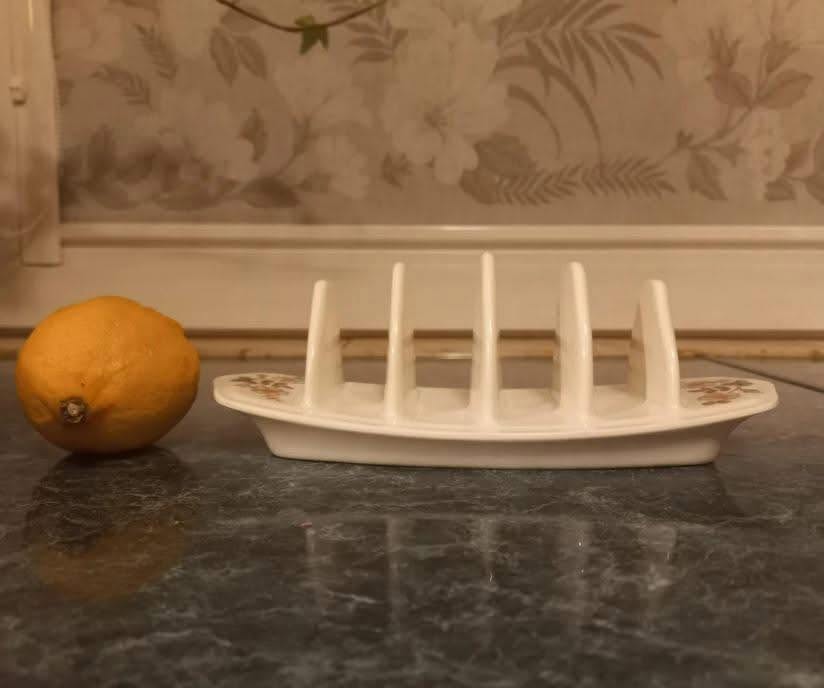
Toast arrived in playful shapes—triangles, fingers, or rounds—and there it stood, the porcelain toast rack, positioned proudly in the middle of the table. A warm slice nestled in each compartment, steam curling up into the morning air, carrying the scent of butter and yeast.
This wasn’t purely about function. It was part of the joy and tradition of those slow, shared meals.
These porcelain toast racks weren’t merely for bread. They held memories. The clink of silverware, the murmur of conversation, the way sunlight filtered through lace curtains onto the white porcelain. They were quiet witnesses to generations of laughter, comfort, and connection.
Today, as we rush through mornings with coffee in travel mugs and breakfast bars eaten on the go, there’s something deeply comforting about rediscovering the elegance of antique breakfast accessories. And among them, the Victorian porcelain toast rack stands as a charming emblem of a slower, more intentional way of living.
Let’s explore the history, beauty, and enduring appeal of these delightful pieces—and why they’re worth celebrating today.
🕰️ The Victorian Era: When Breakfast Became a Ritual
The Victorian period (1837–1901) was a time of profound social change, industrial innovation, and refined domestic culture. For the growing middle class, the home became a stage for displaying taste, morality, and prosperity—and the breakfast table was no exception.
Breakfast in Victorian Society:
|
Aspect
|
Description
|
|---|---|
|
A Structured Meal
|
Breakfast was a formal affair, often served between 8–10 a.m., with multiple courses and specific serving pieces
|
|
Social Significance
|
How a family laid their table reflected their values, education, and social standing
|
|
Domestic Ideals
|
The home was seen as a moral sanctuary; beautiful, functional objects reinforced order and refinement
|
|
Technological Influence
|
Advances in porcelain manufacturing made elegant tableware more accessible to the middle class
|
In this context, the porcelain toast rack emerged not just as a practical tool, but as a statement piece.
🍞 Victorian Porcelain Toast Racks: Form Meets Function
Why Toast Racks Were Invented
Before toast racks, toast was often served stacked on a plate—a practice that trapped steam and led to soggy bottoms. The toast rack solved this elegantly:
✅ Vertical slots allowed air to circulate, keeping toast crisp
✅ Individual compartments prevented slices from sticking together
✅ Elevated design kept toast away from pooled butter or condensation
✅ Beautiful presentation turned a simple food into a visual delight
✅ Individual compartments prevented slices from sticking together
✅ Elevated design kept toast away from pooled butter or condensation
✅ Beautiful presentation turned a simple food into a visual delight
Design Elements That Define Victorian Toast Racks:
Pages: 1 2
