
⚠️ This is for informational purposes only. For medical advice or diagnosis, consult a professional.
xs
Broadleaf plantain is one of those common “yard plants” that many people recognize as a skin-soother, but fewer people think of as food. The flowering shoots (the young, tender stalks that rise from the center of the plant) are a particularly practical edible part: they’re easy to harvest in quantity, they cook quickly, and they contain many of the same plant compounds that made plantain a staple in traditional home use.
This article stays tightly focused on Plantago major flowering shoots—what they are, what they may do for health, and the most useful ways to prepare and use them.
What you’re actually harvesting
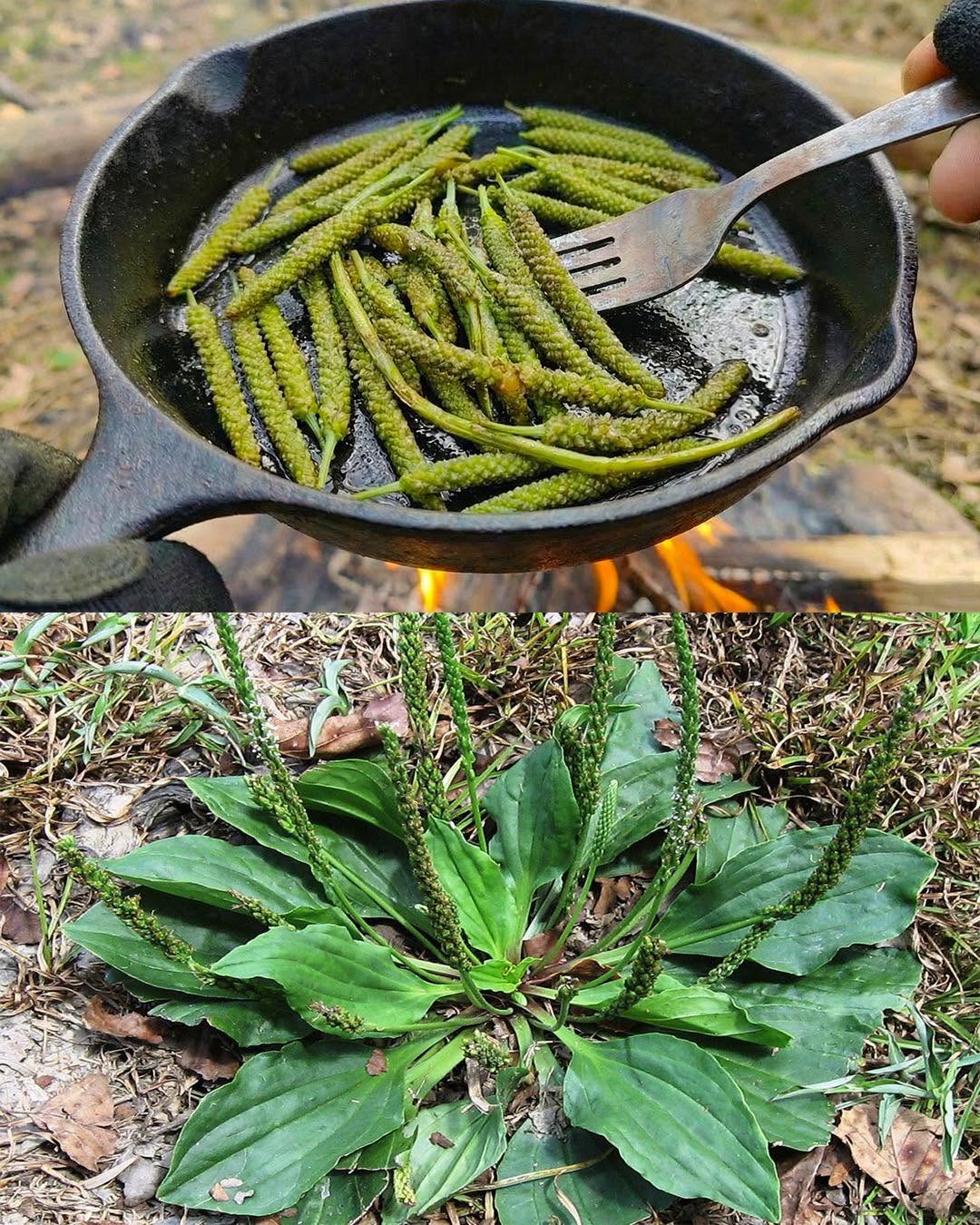
A broadleaf plantain plant forms a flat rosette of oval leaves close to the ground. From the center, it sends up leafless stalks topped with a dense green-brown “spike” of tiny flowers that later becomes seeds.
For eating, the best target is:Young flowering shoots that are still tender and flexible
Ideally before the seed spike becomes hard and dry
Shoots that snap or pop off easily from the base
As the stalks age, they become fibrous and tougher, and the flavor can turn more bitter/astringent.
Why the flowering shoots can be a smart edible choice
1) Nutrients you can reasonably expect
Plantain is not a “miracle food,” but it is a real green plant with a typical wild-edible profile:
Fiber (especially in older leaves and older shoots)
Micronutrients commonly found in leafy plants (vitamins and minerals vary with soil and season)
Antioxidant compounds (polyphenols and related plant chemicals)
The shoots are generally milder than mature leaves, and because they’re eaten as a vegetable-style side, they can be an easy way to add variety and plant compounds to a meal.
2) Plant compounds that explain its traditional “medicinal” reputation
Broadleaf plantain contains several classes of compounds that are widely discussed in herbal medicine traditions and investigated in lab research:
Mucilage (a soothing, gel-like soluble fiber)
Tannins (astringent compounds)
Iridoid glycosides (often highlighted for anti-inflammatory activity)
Flavonoids and phenylethanoid glycosides (antioxidant/anti-inflammatory potential)
These don’t “guarantee” a medical effect when you eat a serving, but they help explain why plantain has long been used for soothing irritated tissue and supporting skin recovery.
Potential health benefits (kept realistic)
A) Soothing and calming irritated tissues
Because of its mucilage, plantain has a longstanding reputation as a “soothing” plant. In practical terms, mucilage can form a gentle coating and may feel calming to mild throat or digestive irritation for some people.
