
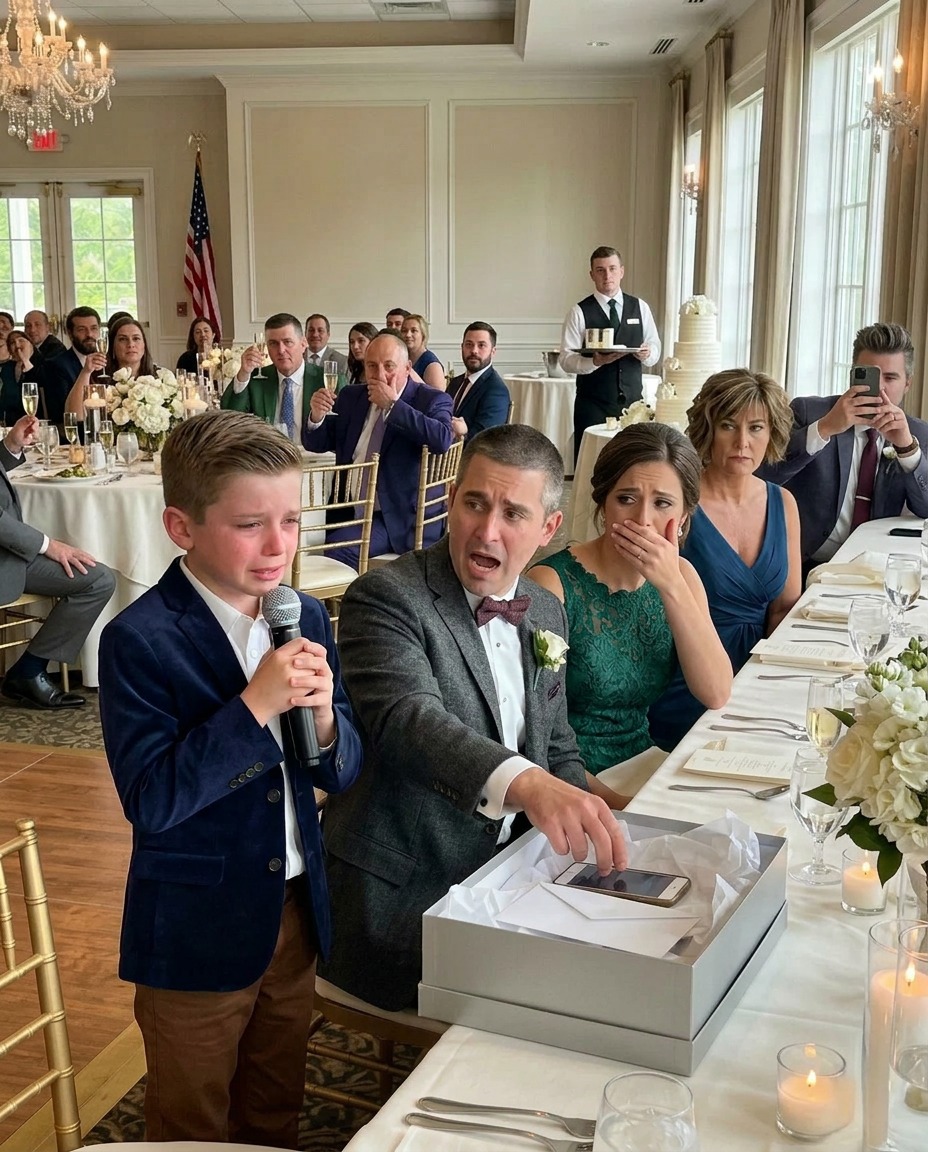
The invitation arrived on a Thursday afternoon, tucked between a water bill and a grocery coupon flyer.
Ordinary things can be cruel that way. They sit beside humiliation as if life is still normal, as if paper towels being on sale belongs in the same moment as an ivory envelope announcing your ex-husband’s wedding to the woman he left you for.
I stood by the mailbox, staring at Ethan Caldwell’s name printed in raised gold letters. Six months after our divorce became final, he was marrying Lila.
And he had invited me to watch.
To understand why I went, you need to understand my son, Noah.
Ethan left on a Tuesday evening in our kitchen. Noah was nine then, upstairs looking for a missing sneaker. Ethan stood under the ugly ceiling light we had always meant to replace and told me he needed space. He said it was not about me. He hoped we could be mature.
But the truth was Lila.
She worked at his firm. By the time Ethan admitted the affair, half his clothes were already in a corporate apartment across town. The conversation was not a confession. It was a notice. He had already left and was simply informing me after the fact.
Over the next year, the damage came quietly.
Late child support. Missed school pickups. Empty apologies. Noah waiting outside the gym after his winter concert while other children left with their families. Ethan texted, Running behind, thirty-seven minutes after the music ended.
He never came.
Noah and I drove home in silence. When we reached the driveway, he said, “It’s okay, Mom,” in a voice that proved it was not okay at all.
I documented everything because paperwork was the only language Ethan respected. Payment dates. Missed visitation texts. School pickup records. A ledger of every promise he broke.
I never showed Noah.
A child should not have to become a witness to his own heartbreak.
But children notice what adults think they hide. They notice the car that never comes. They notice when their mother checks her phone and turns it face down too carefully. They notice when “maybe next weekend” becomes another empty Saturday.
Noah noticed.
When he found the wedding invitation on the kitchen counter, he did not ask why Ethan had invited us.
He asked, “Are we really invited?”
“Yes,” I said.
I wanted to say no. I wanted to throw the invitation away. I wanted to protect him from watching his father promise forever to another woman while the promises he made to us sat forgotten in court files.
But Noah stared at the gold letters and said, “I want to go.”
“Why?”
He shrugged.
“I want to see if he acts different when we’re there.”
So we went.
The wedding was held at a country club outside Dallas, with trimmed hedges, white roses, valet parking, and waiters carrying champagne through rooms that smelled like lilies and polished wood. Everything looked expensive enough to pretend nothing had ever been broken.
Noah wore a navy blazer I bought on sale. The sleeves were too long, but he refused to roll them. Under his arm, he carried a small wrapped box covered in silver paper with a blue ribbon.
I thought he had made a card.
I was wrong.
During the ceremony, Ethan stood at the altar like a man receiving an award. Lila smiled at him with bright certainty. When the officiant spoke of second chances, Ethan looked out at the guests as if he wanted everyone to admire how beautifully he had rebuilt himself, while ignoring what he had destroyed.
At the reception, Noah and I were seated near the back with distant relatives and two of Ethan’s coworkers who knew exactly who I was. Noah sat beside me, cutting his chicken into tiny pieces.
“Do you want to leave?” I whispered.
He shook his head.
“I’m okay.”
After dinner, the speeches began. Lila’s sister cried. Ethan’s best man told a safe story about golf.
Then Ethan stood with a drink in one hand and the microphone in the other.
I knew that posture. The lifted chin. The practiced smile. It was the version of Ethan that made rooms believe whatever story he wanted to tell.
He thanked everyone for coming. He talked about timing. He talked about finding love when you stop settling for less than you deserve.
Then he looked toward the back of the room.
Toward me.
His smile widened.
“I’ll be honest,” he said. “Walking away from that mess was the best decision of my life.”
A few people laughed. Then more joined in.
My fingers tightened around the napkin in my lap. Heat climbed my neck.
Ethan kept smiling.
“Sometimes, you have to clear out your mistakes to make room for something better.”
That was when Lila laughed.
Not loudly. Just enough.
But Noah heard it.
I saw something in his face change—the quiet end of the last hope a child carries before accepting that the person he waited for is not coming.
I started to stand.
Noah touched my arm.
“It’s okay, Mom,” he said.
Then he stood.
He walked to the center of the reception hall with the wrapped box under his arm. The room softened, expecting something sweet.
Ethan grinned into the microphone.
“Well, looks like my son has something to say.”
Noah held out his hand.
“Can I use the microphone?”
Ethan handed it over with theatrical kindness.
“Go ahead, buddy.”
Noah took it with both hands.
“I brought you something, Dad.”
