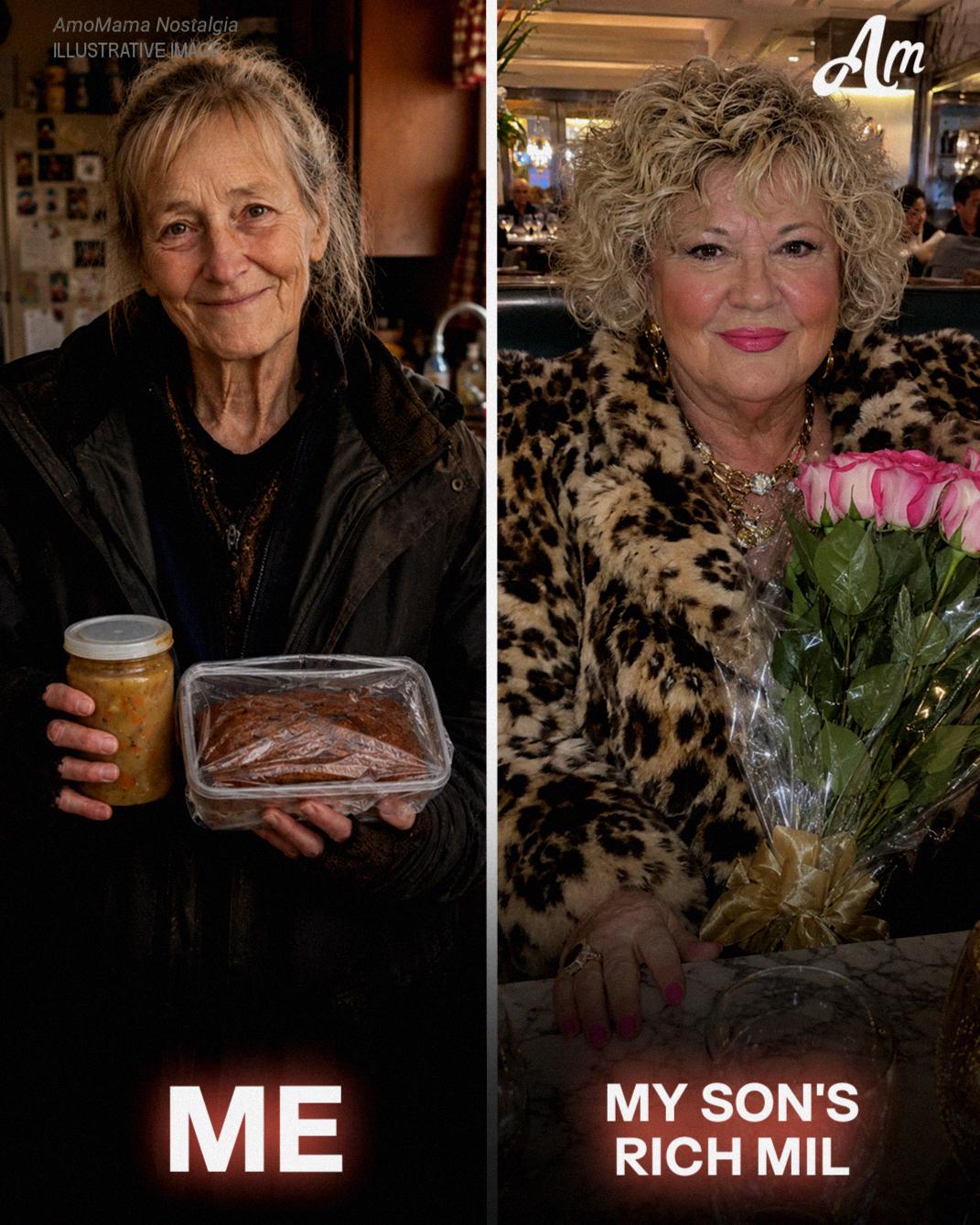
I planned one quiet Mother’s Day with my son, the kind I had dreamed about while hiding how sick I really was. But when he lied about having the flu and chose a richer table instead, I carried one envelope to him that changed everything.
Advertisement
I found out my son wasn’t sick while I stood outside his apartment with lemon-pepper chicken soup in one hand, banana bread in the other, and my last forty dollars of medicine tucked under my arm.
For a moment, I still tried to protect him in my mind.
Maybe Chelsea had taken his car. Maybe he had walked to the pharmacy. Maybe he was upstairs under a blanket, waiting for me to knock.
That’s what mothers do. We build little bridges over ugly truths so we don’t fall into them too fast.
My son wasn’t sick.
Advertisement
Then the doorman looked at my paper bags and said, “Joe? He left about an hour ago, ma’am. Suit and tie. Said he was meeting his wife’s mother at that fancy restaurant across from the bridal boutique.”
My fingers went numb around the soup container.
“The fancy one?” I asked.
He nodded. “Mother’s Day dinner, I think.”
Mother’s Day dinner.
“He left about an hour ago, ma’am.”
Advertisement
***
That morning, I had ironed my blue dress twice.
It was the nicest thing I owned, though one sleeve had a shiny patch near the elbow. I laid it across my bed, then sat beside it because the room tilted again.
“Not today,” I muttered, pressing a hand to my ribs. “You’re not ruining Mother’s Day.”
My doctor had told me to rest more. I had smiled like a polite liar and said I would.
Then I went home and made a roast.
It was small, the kind wrapped tight in plastic with a discount sticker over one corner, but I had saved for it. I peeled carrots, mashed potatoes, and baked Joe’s favorite banana bread.
“You’re not ruining Mother’s Day.”
Advertisement
When he was little, he used to hover by the oven and ask, “Is it ready yet?” every three minutes.
After his father died, banana bread became our celebration food, apology food, bad-report-card food, and “we made it to Friday” food.
I set two plates at my kitchen table.
One for me.
One for Joe.
The empty chair looked patient, like it trusted him more than I did.
At ten-thirty, the phone rang.
I set two plates at my kitchen table.
Advertisement
“Thank you for making me a mom, my sweetheart,” I said, wiping flour from my wrist.
Joe coughed into the phone. It sounded practiced, but I hated myself for noticing.
“Ma, I’m sorry. I’ve got the flu or something. I feel awful.”
My heart dropped before my pride could catch it. “Oh, honey. Do you have a fever?”
“Yeah. Chills. The whole thing, Mom.”
“Did Chelsea get you anything?”
“She’s out with her mom today. I told her not to cancel. I’ll be fine. I just need to be home.”
“I’ve got the flu or something.”
Advertisement
“That’s all right. We’ll do our lunch another day, son.”
“Thanks, Ma. I knew you’d understand.”
I looked at the roast cooling on the counter. “Of course I understand.”
***
After we hung up, I stared at the two plates until my eyes burned.
I almost cleared his plate.
Then I stopped.
Mothers are foolish that way. We leave room for people who already told us they aren’t coming.
“Of course I understand.”
Advertisement
I wrapped the banana bread, poured soup into a container, and counted the cash in my purse.
Forty-two dollars.
***
At the pharmacy, I put back the name-brand fever reducer and bought the generic one. I put back the honey drops and bought plain cough drops.
By the time I reached Joe’s building, my arms ached and my breath thinned. His parking space was empty.
That’s when the doorman told me where my son had gone.
I could have driven home.
His parking space was empty.
Advertisement
Instead, I sat in my old car with the medicine bag on my lap, my thoughts heavy, and I pulled the envelope from my purse.
The envelope belonged at my kitchen table, not in some restaurant with gold mirrors and wineglasses.
Not in front of Eleanor, my daughter-in-law’s mother.
At home.
I had pictured it while peeling carrots and checking the roast. Joe would sit across from me. He would complain that I had made too much food. I would tell him, “You always say that, then leave with half of it in plastic containers.”
I pulled the envelope from my purse.
Advertisement
Then, after dessert, I would slide the envelope toward him.
“Open it, baby,” I would say.
That was the plan.
***
A month earlier, Joe had sat at that same table, rubbing his forehead like the world had personally disappointed him.
“Open it, baby.”
“This car would change everything, Ma,” he said. “It’s not just a car. It’s work. It’s image. It’s opportunities.”
Advertisement
“How much?” I asked.
He laughed without looking at me. “Too much.”
“How much, Joe?”
“Thirty thousand.”
I whistled softly. “That’s a lot of opportunities.”
“How much?”
He leaned back, eyes moving over my chipped mug, faded curtains, and the old stove I had to light twice. “You don’t get it. Around Chelsea’s family, everything matters. The car, the clothes, and the way people look at you.”
Advertisement
I folded my hands under the table. “I understand better than you think. I spent thirty years being looked down on so you wouldn’t have to be.”
His face softened. “Ma, I didn’t mean it like that.”
“No,” I said. “But you said it like that.”
He stared at his hands. “I just want them to respect me.”
“Then give them something worth respecting, Joe.”
“I just want them to respect me.”
Advertisement
He didn’t answer.
So I’d sold my little house.
Not the house where I raised him. That one had been gone for years. This was the small place I had bought after years of working three jobs and sleeping in four-hour stretches.
The paperwork was done. The buyer had signed. I had until the end of the month to move out.
My friend Ruth’s daughter had a studio behind her house, one of those converted garages with a tiny kitchen and a window over the sink.
Ruth had squeezed my hand and said, “Marianne, Lena will look after you. You won’t be alone there.”
I had until the end of the month to move out.
Advertisement
“That sounds perfect.”
And maybe it was. Maybe a smaller place made sense now. Fewer stairs. Less cleaning. Someone nearby if I needed help.
I told myself it was practical.
