
As you tend to your garden and begin the routine task of cleaning out the flower beds, it’s not uncommon to stumble upon something unexpected. For many gardeners, the discovery of tiny, dried objects that resemble miniature brown skulls nestled among the dead stalks of plants can be both intriguing and unsettling. This peculiar find often leads to questions about whether these are the result of some strange mutation or simply a natural occurrence.
It turns out that these tiny ‘skulls’ are not only real but are a well-known phenomenon in the world of botany. These intriguing seed pods belong to a plant commonly known as the Snapdragon (Antirrhinum majus). This fascinating aspect of the plant’s life cycle has captivated gardeners and botanists alike, offering a glimpse into the more mysterious side of nature’s design.
1. Meet the Plant Behind the ‘Skulls’: The Common Snapdragon
The Snapdragon, scientifically known as Antirrhinum majus, is a popular garden plant renowned for its vibrant, tubular flowers that resemble the face of a dragon. Native to the Mediterranean region, Snapdragons thrive in well-drained soil and full sun, making them a staple in many garden beds across the world.
Snapdragons are typically grown as annuals in cooler climates but can be perennial in warmer regions. They can reach heights of up to 1 meter (about 3 feet) and offer a wide range of colors including pink, red, yellow, and white. The plant’s unique flower structure and growth habit make it a favorite among gardeners looking to add a touch of whimsy to their floral displays.
2. Why Snapdragon Seed Pods Look Exactly Like Tiny Skulls
The eerie resemblance of dried Snapdragon seed pods to tiny skulls is a natural part of the plant’s reproductive process. After the flowers have been pollinated and the petals fall away, the seed pods begin to form. As the pods mature and dry out, they split open at the top, revealing a structure that bears an uncanny resemblance to a human skull.
This skull-like appearance is due to the shape of the pod and the way it splits open, which creates eye socket-like holes and a semblance of a mouth. The dried pods are typically around 1-2 centimeters in length and are a brownish color, adding to their skeletal appearance.
3. How to Tell If Your Garden ‘Skulls’ Are Really Snapdragon Pods
Identifying Snapdragon seed pods is relatively straightforward if you know what to look for. First, consider the plant’s location and growing conditions; Snapdragons are commonly found in garden beds with good sunlight exposure. Next, examine the plant structure; Snapdragon plants have tall, spiky stems with lance-shaped leaves.
When inspecting the seed pods, look for the distinctive skull-like shape. The pods will be small, about 1-2 centimeters, and brown in color. The ‘eye sockets’ and ‘mouth’ are key indicators that you’re dealing with Snapdragon pods rather than an anomaly or mutation.
4. Other Plants With Spooky Seed Pods (And How They Compare)
Snapdragons are not the only plants with seed pods that evoke a sense of the macabre. The Lotus plant (Nelumbo nucifera) produces seed pods that resemble the head of a showerhead or, to some, a collection of eyeballs. Similarly, the Devil’s Claw (Proboscidea louisianica) has seed pods that look like the talons of a creature from folklore.
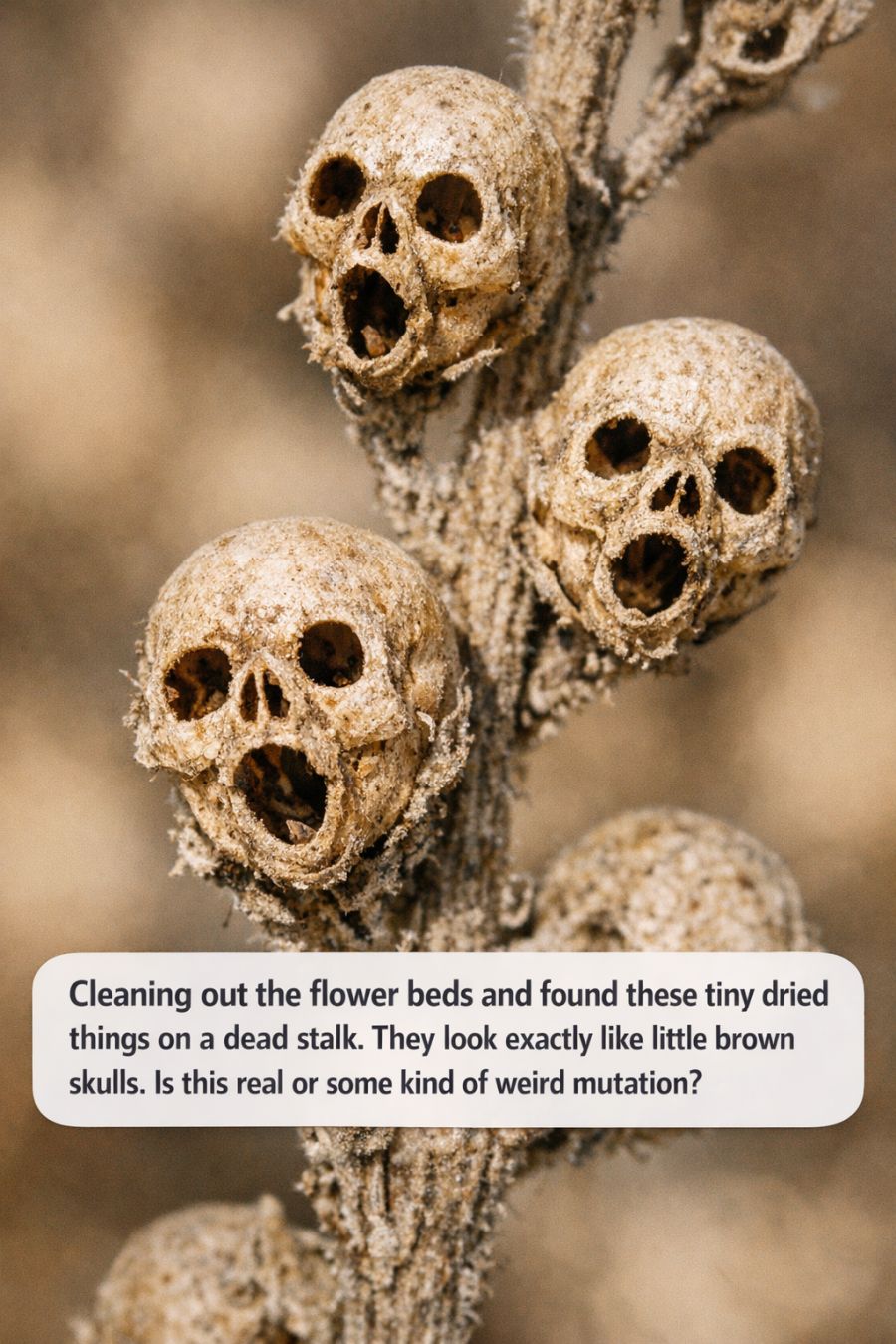
Cleaning out the flower beds and found these tiny dried things on a dead stalk. They look exactly like little brown skulls. Is this real or some kind of weird mutation?
Pages: 1 2
