
Succulents are beloved by plant enthusiasts for their unique shapes, vibrant colors, and low-maintenance reputation. However, many indoor gardeners find that by the time February rolls around, their once-thriving succulents have become soft, leggy, and unrecognizable. The transition from the holiday season into the depths of winter presents a unique set of challenges for indoor succulents, which may struggle to adapt to the reduced light, cooler temperatures, and fluctuating humidity levels.
Understanding the specific needs of succulents during this time is crucial for maintaining their health and vitality. While these resilient plants are adapted to survive in harsh desert environments, the conditions inside our homes can be quite different. The key to keeping succulents firm and healthy through the winter months lies in adopting a few strategic New Year habits that address common care pitfalls.
Why So Many Indoor Succulents Fail By February
Many indoor succulents begin to decline as early as February due to a combination of factors that disrupt their natural growth cycle. One of the primary reasons is insufficient light. During winter, days are shorter, and the intensity of natural sunlight is significantly reduced. Succulents, which thrive in bright, direct light, often receive less than 4-6 hours of sunlight a day, leading to etiolation — a condition where plants stretch towards the light source, weakening their structure.
Another common issue is overwatering. Succulents store water in their leaves, making them susceptible to root rot if the soil remains consistently wet. Many indoor gardeners maintain the same watering routine year-round, not realizing that succulents require much less water in the winter months when their growth naturally slows. Additionally, the lack of airflow in tightly sealed homes can exacerbate these problems, as stagnant air can lead to fungal diseases and pest infestations.
The New Year Habit That Quietly Saves Your Succulents
To ensure succulents remain firm and healthy, adopting a New Year habit can make all the difference. This involves a comprehensive review and adjustment of their care routine, tailored specifically for the winter months. By taking the time to reset your approach to watering, lighting, and general maintenance, you can address the unique challenges of the season and provide your succulents with the conditions they need to thrive.
Incorporating simple yet effective practices such as adjusting your watering schedule, optimizing light exposure, and ensuring proper airflow can prevent common issues like overwatering and etiolation. These adjustments not only help your succulents survive the winter but also lay the foundation for strong growth as the days begin to lengthen again in the spring.
1. Resetting Your Watering Routine With a January Audit
Begin the New Year by reassessing your watering habits. During winter, succulents need less water due to slower growth rates and lower evaporation rates. Perform a ‘January Audit’ by checking the moisture level of the soil using your finger or a moisture meter. Allow the top 1-2 inches of soil to dry completely before watering again, which may mean reducing watering frequency to every 2-3 weeks.
By adjusting your watering routine in January, you can prevent waterlogged soil and root rot, keeping your succulents firm and healthy. This simple adjustment acknowledges the seasonal change and aligns your care routine with the plant’s natural needs.
2. The Viral ‘Calendar Check-In’ That Prevents Overwatering
A popular method circulating among plant enthusiasts is the ‘Calendar Check-In’. This involves marking specific days on your calendar for succulent care activities. By setting reminders for watering, you can prevent the tendency to water out of habit rather than necessity.
Use a digital calendar or a planner to schedule watering days based on your January Audit findings. Adjust these dates if you notice changes in the plant’s environment, such as increased sunlight or heat from indoor heating. This habit encourages mindful watering and helps you avoid overwatering, which is a common killer of indoor succulents.
3. New Year Light Mapping: Moving Plants to Their Strongest Winter Sun
During the New Year, take time to assess the light conditions in your home. Consider performing a ‘light mapping’ exercise, where you identify the spots in your home that receive the most direct sunlight. South-facing windows typically provide the brightest light, but each home is unique.
Move your succulents to these high-light areas, ensuring they receive at least 4-6 hours of bright, indirect sunlight daily. If natural light is insufficient, consider supplementing with a grow light. This adjustment can prevent etiolation and keep your succulents compact and firm.
4. Decluttering Windowsills So Succulents Actually Get Airflow
A cluttered windowsill can block both light and airflow, two crucial elements for succulent health. As part of your New Year routine, declutter your windowsills by removing unnecessary items and ensuring there is adequate space between plants.
This decluttering not only maximizes light exposure but also promotes better airflow, reducing the risk of fungal diseases and pests. Air circulation helps keep the leaves dry and prevents mold and mildew from developing, ensuring your succulents remain firm and healthy.
5. Swapping Cute Pots for Breathable Ones During Your New Year Tidy-Up
While decorative pots can enhance the aesthetic of your home, they may not always be practical for succulent health. During your New Year tidy-up, consider swapping these for pots made of breathable materials like terracotta, which allow excess moisture to evaporate quickly.
Breathable pots help prevent water retention in the soil, reducing the risk of root rot. Ensure pots have drainage holes to further facilitate proper drainage. This simple swap can make a significant difference in maintaining the health and firmness of your succulents.
6. The January Soil Check: When a Simple Repotting Stops Root Rot
Conduct a ‘January Soil Check’ to assess the condition of the soil your succulents are planted in. If the soil is compacted or retains too much moisture, consider repotting your succulents into a well-draining cactus or succulent mix.
Repotting not only refreshes the soil but also gives you an opportunity to inspect the roots for signs of rot or pests. By addressing these issues early in the year, you can prevent more serious problems from developing and ensure your succulents remain healthy.
7. Using New Year Humidity Checks To Avoid Soft, Mushy Leaves
Succulents prefer dry air, and high indoor humidity can lead to soft, mushy leaves. As part of your New Year routine, monitor the humidity levels in your home using a hygrometer. Aim to keep humidity levels between 30-50% for optimal succulent health.
If humidity is too high, consider using a dehumidifier or relocating your succulents to a less humid area. Ensuring the right humidity level helps prevent issues related to overwatering and keeps your plants firm and vibrant.
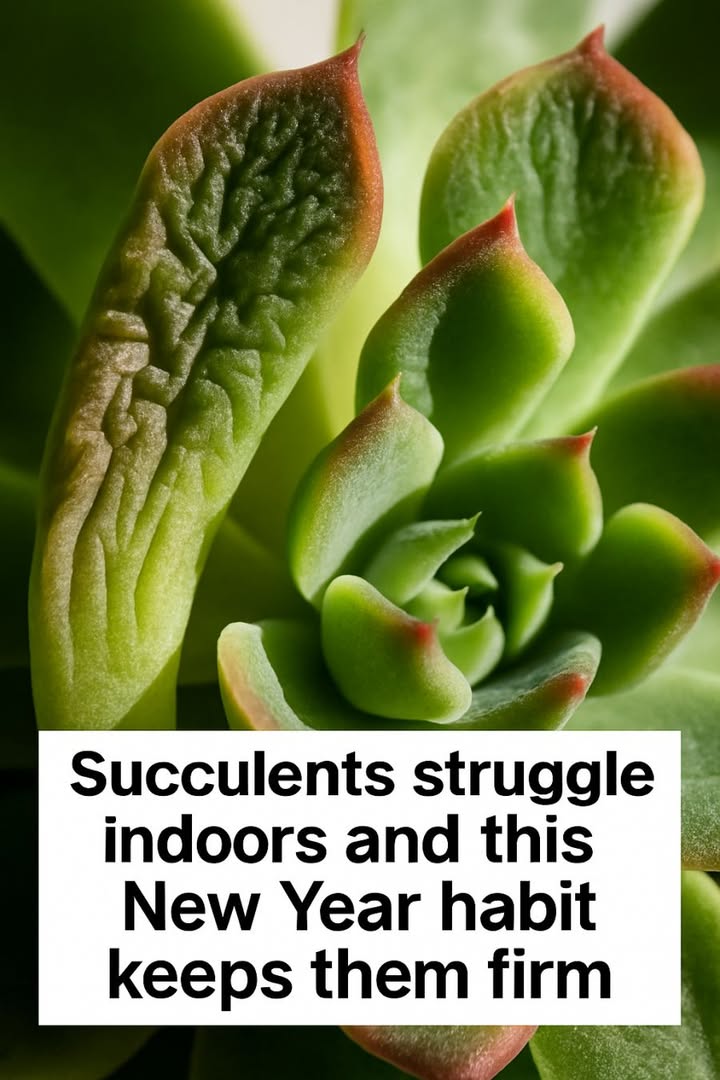
Succulents struggle indoors and this New Year habit keeps them firm
Pages: 1 2
