
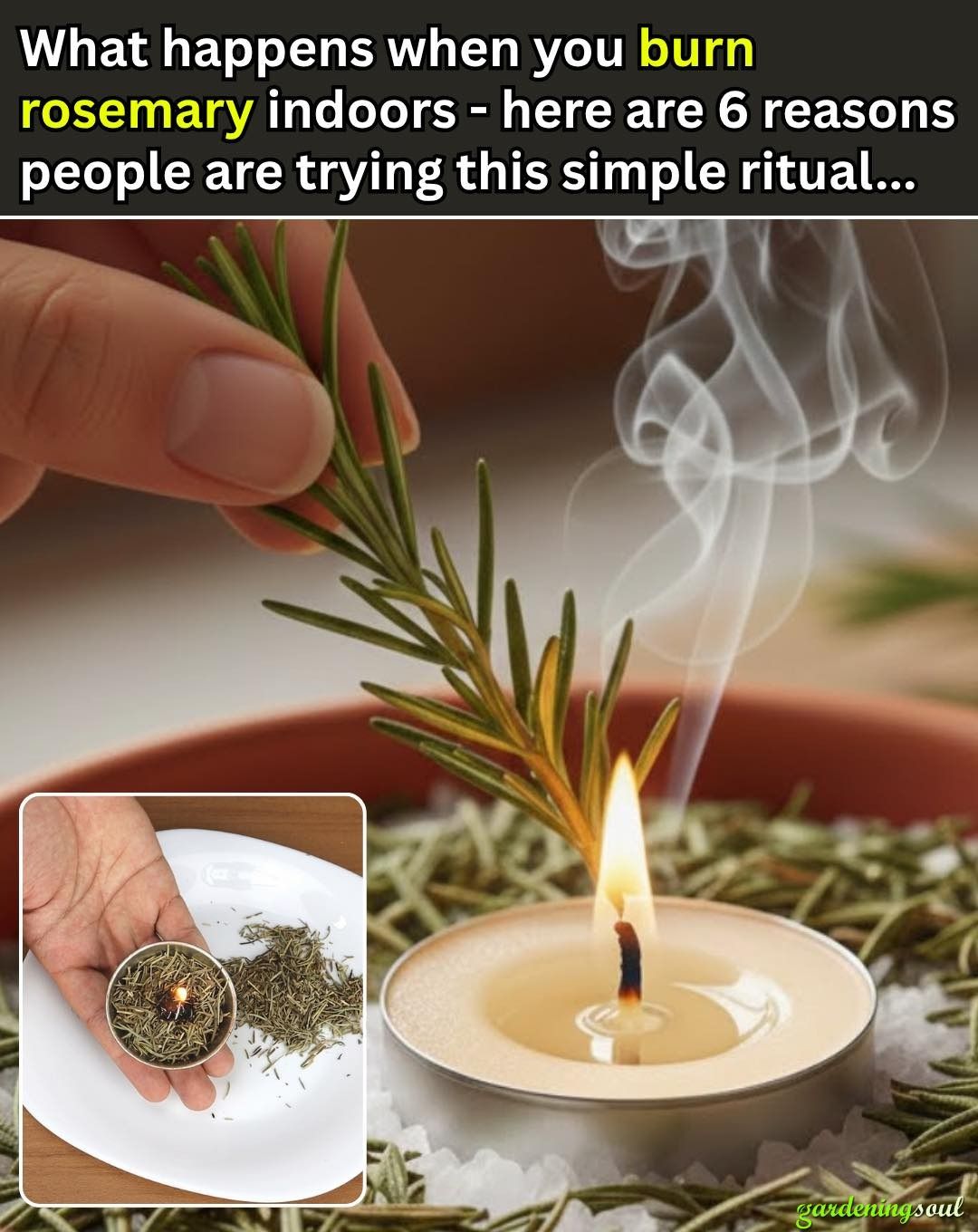
For millennia, the aromatic herb rosemary (Salvia rosmarinus) has been revered not just as a culinary staple, but as a “sacred smoke.”
Long before it was a garnish for roasted potatoes, ancient Greeks and Romans burned rosemary in temples to clear the mind and purify the air.
Today, this practice is experiencing a massive resurgence as people move away from synthetic room sprays in favor of botatnical fumigation.
Burning rosemary – often referred to as “herbal smudging” – releases a complex bouquet of volatile oils, including cineole, camphor, and alpha-pinene.
Discover more
Trees
Gardening
Flora & Fauna
When these compounds are aerosolized through heat, they interact with both our physical environment and our neurological pathways.
Here are the 6 primary reasons why burning rosemary indoors has become a definitive wellness ritual and the science behind what actually happens when you light it.
1. Neurological Clarity and Memory Enhancement
Rosemary has been the “herb of remembrance” since the time of Shakespeare. Modern science is finally catching up to this ancient wisdom, particularly regarding the inhalation of its smoke and vapors.
The Mechanism: Rosemary contains a compound called 1,8-cineole. Research suggests that when this compound is inhaled, it may act on the neurotransmitter systems linked to memory. It inhibits the enzyme acetylcholinesterase, which breaks down acetylcholine – the chemical responsible for learning and focus.
The Result: Burning rosemary during a study session or a deep-work block isn’t just about the scent; it’s about creating a “cognitive micro-climate” that supports mental sharpness and long-term recall.
