
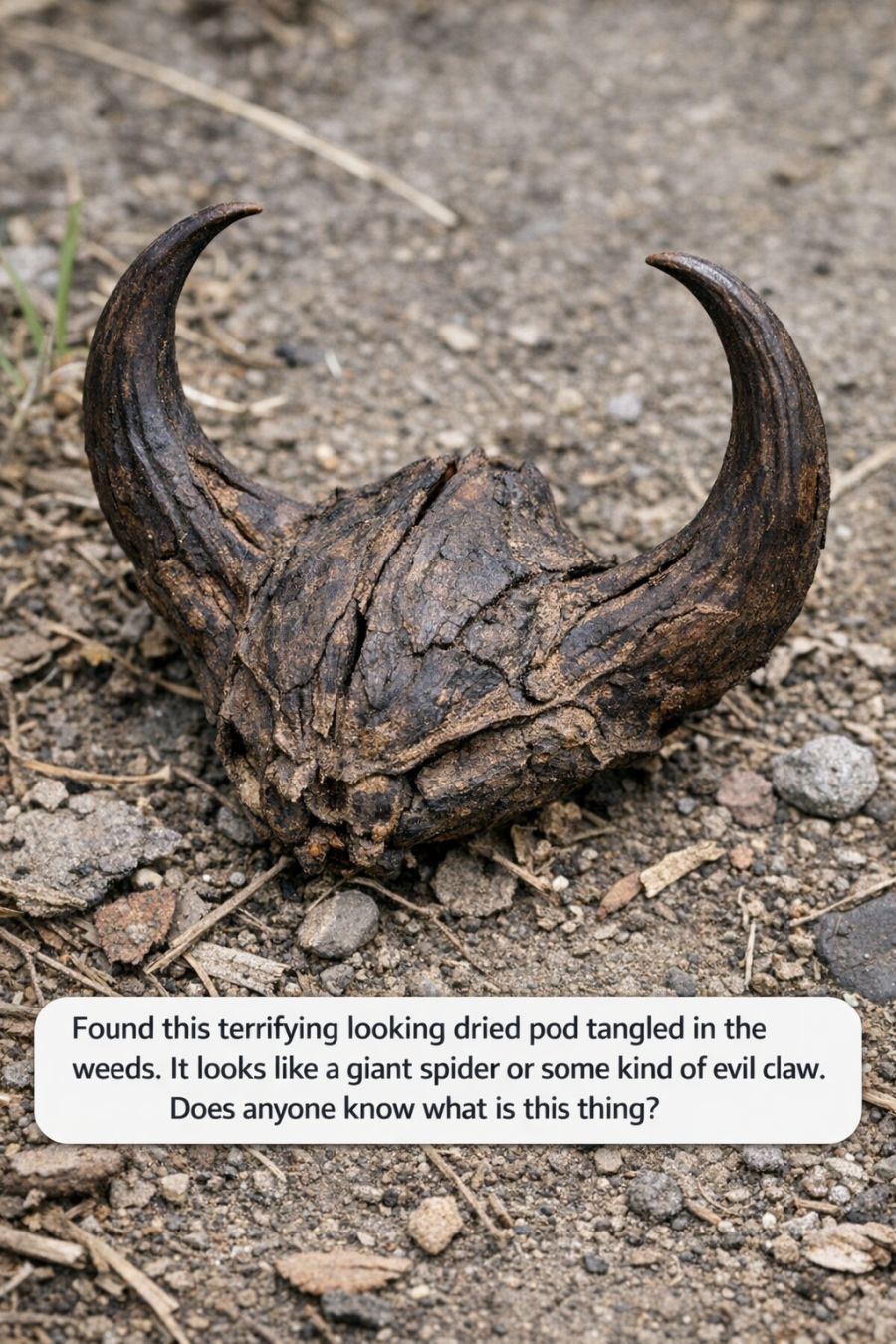
In the world of flora, not everything is as it seems. While many people are familiar with vibrant flowers and towering trees, there exists a subset of plants that instill a sense of unease with their bizarre and menacing appearances. One such enigma is the dried pod that resembles a giant spider or a sinister claw, often discovered tangled in the weeds of untamed landscapes.
As curiosity and fear intertwine, those who stumble upon this peculiar pod frequently seek answers to what it might be. Is it a remnant of some alien life form, a part of a new species yet to be documented, or simply an intricate part of nature’s design? This article delves into the mystery, unveiling the reality behind this eerie botanical phenomenon.
1. The Creepy Pod That Looks Like a Giant Spider Claw
The dried pod in question is often found with its long, spindly extensions splayed out like the legs of a spider. Measuring approximately 5 to 10 centimeters in length, its dark, woody exterior and pronounced hooked ends give it the appearance of an alien appendage or a monstrous claw ready to ensnare the unwary. This unsettling aesthetic is enough to send shivers down the spine of anyone who encounters it without prior knowledge of its origins.
2. First Reactions: Fear, Fascination, And Viral Photos
Upon first glance, the pod can elicit a blend of fear and fascination. Social media platforms have seen a surge in images and videos of this peculiar pod, often accompanied by captions expressing horror or bewilderment. Users share their findings with hashtags like #CreepyNature or #MysteryPod, fueling public intrigue and leading to viral discussions about the pod’s true identity.
3. Meet the Culprit: The Devil’s Claw Seed Pod
The plant responsible for this eerie pod is commonly known as the Devil’s Claw, a name that suits its ominous appearance. The scientific name, Proboscidea louisianica, alludes to its unique structure, which resembles an elephant’s trunk before drying into its claw-like form. Native to the southwestern United States and parts of Mexico, the Devil’s Claw is a member of the Martyniaceae family.
4. Where Devil’s Claw Grows And Why You’re Finding It in Weeds
Devil’s Claw thrives in arid and semi-arid environments, often flourishing in disturbed soils and neglected fields where other plants struggle to survive. Its resilience makes it a common sight in the wild, particularly in areas with minimal agricultural activity. When left unchecked, it can become entangled with other vegetation, leading to its frequent discovery amidst weed patches.
5. How the Pod Forms, Dries, And Turns Into a ‘Claw’
The transformation from innocuous plant to menacing pod begins with the formation of a fleshy green capsule. As the plant matures, the capsule dries and splits open, revealing its inner structure and adopting the claw-like shape that characterizes the dried seed pod. This drying process not only enhances its eerie appearance but also plays a crucial role in its method of seed dispersal.
6. The Ingenious Seed-Dispersal Trick Behind the Terrifying Shape
The design of the Devil’s Claw pod is an evolutionary marvel. Its hooked extensions are not merely for show; they serve the practical purpose of latch onto the feet of passing animals. As creatures move through the landscape, the pod is carried away from its parent plant, allowing seeds to be deposited over a wider area. This strategy enhances the plant’s chances of successful propagation.
7. Is Devil’s Claw Dangerous to People, Pets, Or Wildlife?
Despite its menacing appearance, the Devil’s Claw is not inherently dangerous to humans, pets, or wildlife. The pods are not toxic, although they can cause discomfort if stepped on barefoot or handled carelessly. For animals, the pod’s hooks can become a nuisance, occasionally tangling in fur or feathers, but they do not pose a serious threat.
Pages: 1 2
