
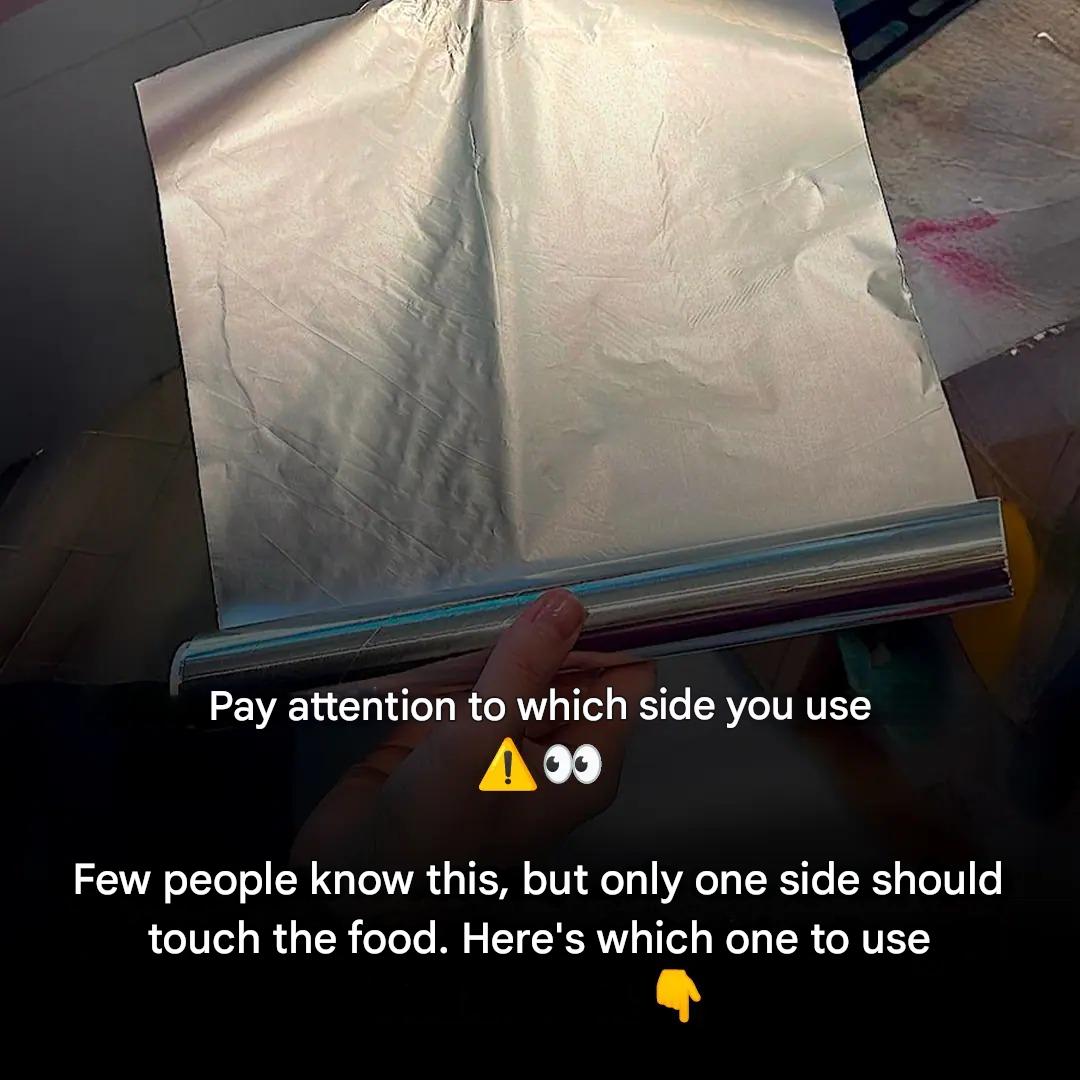
Shiny or matte side? The answer is simpler than you might think—and could very well put an end to an age-old kitchen debate.
Admit it: you’ve hesitated before when faced with your roll of aluminum foil. Shiny side up? Matte side down? We’ve all heard a different theory, often passed down like a grandmother’s secret. Yet, the answer is much simpler than you think… and it might surprise you.
Shiny or matte: does it really make a difference?
Look at your aluminum foil: one side is smooth and shiny, the other slightly more matte. Instinctively, we assume that one must cook better than the other.
See more
paper
aluminum foil
Paper
In reality? Not at all.
For conventional oven cooking, both sides work in exactly the same way. They conduct heat identically and do not influence either the temperature or the cooking of the food.
So you can use whichever side you prefer, without fear of ruining your gratin or fish en papillote.
Why are there two different sides then?
The difference doesn’t come from a special treatment, but from the manufacturing process.
During the rolling process, two layers of aluminum are pressed simultaneously between rollers to obtain a very thin and resistant sheet. The side in contact with the rollers becomes shiny, while the other, in contact with the second sheet, remains more matte.
This is simply a mechanical effect, not a special feature.
In other words: no mystery, just industrial technique. The only case where this changes: non-stick aluminum.
There is, however, an exception.
See more
Aluminum
aluminum
Matte
Some rolls are labeled “non-stick.” In this specific case, one side receives a treatment designed to limit food sticking.
And this is usually the matte side.
Manufacturers indicate this on the packaging. If your roll is labeled “non-stick,” check the instructions and place the coated side against the food to benefit from the non-stick effect.
Otherwise, you can continue to wrap your vegetables, meats, or desserts without worry. Is one side better for better cooking?
Some misconceptions suggest that the shiny side reflects more heat. In practice, in a home oven, the difference is minimal and imperceptible.
See more
Foil
The
Aluminum foil
Heat circulates primarily through convection (hot air) and conduction (direct contact with the dish or food), much more so than through reflection.
Therefore, whether you are preparing a salmon en papillote, roasting vegetables, or covering a dish to prevent it from browning too quickly, the result will be the same with aluminum foil used in either direction.
A quick reminder
Even though the side doesn’t matter much, a few simple rules will help you use aluminum foil safely:
See more
Tea
Aluminum foil
Oven
Avoid prolonged direct contact with highly acidic foods (lemon, tomato) at high temperatures, as the acidity can slightly damage the metal.
Never use it in the microwave: this will cause sparks and can damage the appliance.
Do not place it in direct contact with the heating elements or the oven walls to avoid any risk of overheating.
Following these precautions ensures safe use and optimal cooking results.
The next time you unroll your aluminum foil, you can do so with peace of mind: shiny or matte, the choice is yours.
